
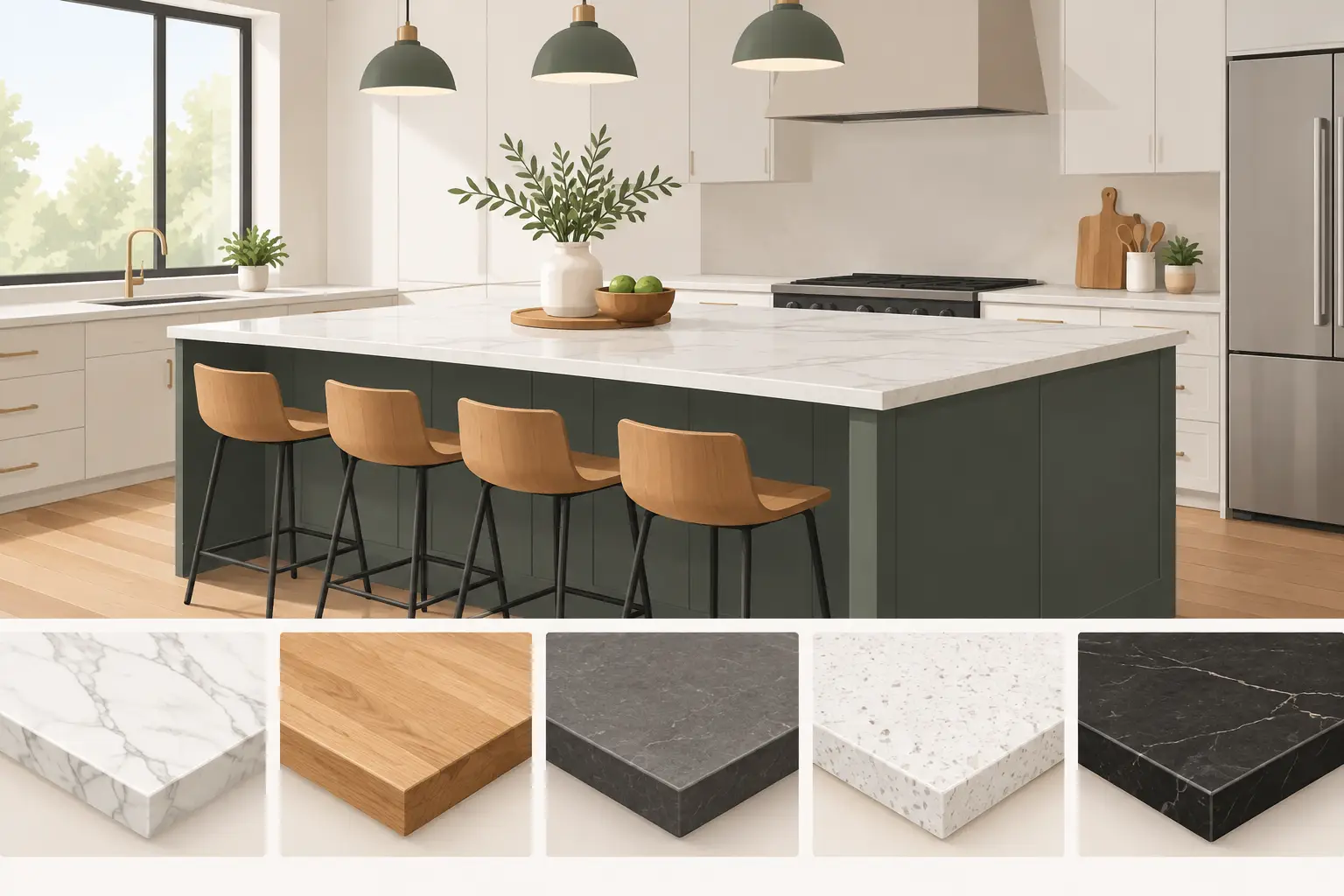
A kitchen island earns its keep fast. It becomes the landing spot for grocery bags, the homework table, the serving station, and often the place where everyone gathers before dinner. That is why a kitchen island surface guide should start with real life, not just a showroom photo. The right top needs to fit the way you cook, clean, entertain, and use the space every day.
Material matters, but so do thickness, edge detail, overhang, maintenance expectations, and the size of the island itself. A surface that looks perfect in a sample can feel impractical if it scratches too easily for your household or turns a comfortable seating area into a cramped one.
Kitchen Island Surface Guide: Start With How You Use It
Before comparing materials, decide what your island needs to do. A prep-focused island has different demands than an island built mainly for seating, storage, or serving. If you chop vegetables directly on the top, host big family meals, or have children who treat the island like a craft table, those details should shape your choice.
Think about heat, water, and impact. Do you regularly set down hot pans? Is the island next to a sink where splashes are common? Will bar stools slide underneath an overhang? There is no single best surface for every kitchen. There is only the surface that fits your priorities with the fewest compromises.
Budget should be considered early, too. The installed price can change substantially based on material thickness, seams, cutouts, edge profiles, and whether the island requires a large custom slab. A smaller surface may make a premium material realistic, while a large island may call for a material that delivers the look you want at a more workable price.
Butcher Block: Warm, Repairable, and Made for Gathering
Solid wood butcher block brings a kind of warmth that stone and manufactured surfaces cannot quite duplicate. Each board has natural grain, color variation, and character. On a kitchen island, it can soften a room full of painted cabinets, tile, and stainless appliances while making the space feel more inviting.
Wood is particularly well suited to islands used for food prep, baking, and casual dining. It is easier on glassware than stone, quieter when plates are set down, and comfortable to lean against. A well-built wood top can also be made to exact dimensions, which is valuable when standard countertop sizes do not fit your layout.
The trade-off is care. Wood should not be treated like a maintenance-free manufactured surface. It needs a quality finish and occasional upkeep based on how the top is used. An oil-finished top used for direct food preparation will need regular conditioning. A protective film finish can offer stronger resistance to spills and daily messes, but it is not intended as a cutting surface.
The advantage is that wood is repairable. Small scratches, water marks, and signs of use can often be sanded and refinished rather than forcing a full replacement. That is a meaningful difference for homeowners who want a surface that can age gracefully instead of looking disposable after a few busy years.
Choosing the Right Wood Construction
Not all wood island tops are built the same. Edge-grain butcher block shows long, continuous strips of lumber across the surface and offers a clean, classic look. End-grain butcher block displays the ends of the wood blocks, creating a distinctive checkerboard pattern that is especially popular for dedicated chopping areas. Wide-plank and slab-style tops highlight broader boards and more dramatic grain.
Species also changes the look and feel. Maple is light, clean, and traditionally associated with butcher block. Walnut offers deep brown color and richer contrast. White oak has a strong, timeless grain and works beautifully in both modern and traditional kitchens. The best choice often comes down to the cabinet color, floor tone, and whether you want the island to blend in or become the focal point.
Quartz: Low-Maintenance and Consistent
Quartz is a popular island surface for homeowners who want an even color, a polished look, and minimal routine maintenance. Because it is engineered, it offers predictable patterning and is available in styles that resemble marble, concrete, or natural stone.
For a busy kitchen, quartz handles everyday spills well and does not need sealing. It is a practical option for an island used for serving, eating, and general family traffic. It is also easy to coordinate with perimeter counters when you want a cohesive kitchen design.
Its limitations are worth understanding. Quartz can be damaged by excessive heat, so hot cookware should not be placed directly on it. It can also chip along an exposed edge if struck hard enough. While it is durable, it is not indestructible, and repairs may be more noticeable than a touch-up on wood.
Natural Stone: One-of-a-Kind Beauty With More Variables
Granite, marble, soapstone, and quartzite each bring natural variation that manufactured materials cannot reproduce. Every slab is different, which can make a stone island the centerpiece of the kitchen. If visual movement, veining, and a high-end natural finish are your top priorities, stone deserves a close look.
Granite is known for strength and strong heat resistance. Quartzite can offer dramatic veining along with excellent durability, though the name can cause confusion because it is different from engineered quartz. Marble is prized for its classic appearance but can etch or stain more easily, especially around acidic foods and drinks. Soapstone has a softer, matte look and develops a natural patina over time.
Stone often requires more planning than buyers expect. Some varieties need periodic sealing, and large slabs are heavy. Support, cabinetry strength, seams, and installation access all need to be considered. If your island includes a long seating overhang, ask how the fabricator plans to support it without interrupting the look of the surface.
Laminate, Solid Surface, and Porcelain: Practical Alternatives
Laminate has come a long way in appearance and can be a smart choice when budget is the main driver. It is available in many colors and patterns, including convincing wood and stone looks. It is easy to clean, though it can be vulnerable to heat, deep scratches, and water damage if seams or edges fail.
Solid surface materials offer a smooth, nonporous finish with inconspicuous seams and repairable scratches. They work well in clean-lined kitchens and can be shaped into integrated details. Their softer surface makes them less heat-resistant than stone, so trivets still matter.
Porcelain slabs are increasingly used for islands because they are highly heat-resistant, stain-resistant, and available in dramatic stone-like designs. They can be an excellent performance choice, but fabrication requires specialized skill, and edge treatments may feel different than a thick slab of stone or solid wood. Availability and installation costs vary by market.
Details That Make an Island Top Work Better
The surface material gets most of the attention, but the build details determine whether the finished island feels intentional. Thickness can make a major visual difference. A thick wood top creates a substantial furniture-like look, while a thinner stone or porcelain profile can feel crisp and modern.
Consider the edge profile as part of daily comfort. A lightly eased edge is simple and practical. A rounded edge is comfortable where people sit. More decorative profiles can suit traditional kitchens, but they may collect crumbs and can be harder to repair if damaged.
Overhang deserves careful measurement. Seating generally needs enough knee room to be comfortable, and a longer overhang may need hidden steel brackets or other support. The exact requirement depends on the material, thickness, and span. A custom maker or fabricator should review this before production rather than treating it as an afterthought.
For wood tops, also plan for natural seasonal movement. Solid wood expands and contracts across its width as humidity changes. Proper mounting allows the top to move naturally without splitting or stressing the base. This is one of the reasons handmade construction and accurate installation details matter.
When a Mixed-Material Island Makes Sense
You do not have to choose one material for every job. A wood section can create a warm prep or baking zone beside a stone work surface. A wood island top can pair with quartz or stone perimeter counters to keep the room balanced. This approach is especially useful when you love the look of wood but want a more heat-tolerant area near a range.
At Tooill Cabinets, custom wood island tops are built around the measurements and finish needs of the individual project, not a one-size retail size. That gives homeowners more control over grain direction, thickness, species, edge style, and how the top works with the cabinetry below.
The best kitchen island surface is the one you will enjoy using without worrying about every small mark. Choose the material whose maintenance and character match your household, then give the details the same attention you give the color. A well-planned island becomes more than a countertop – it becomes the most useful piece of furniture in the kitchen.