
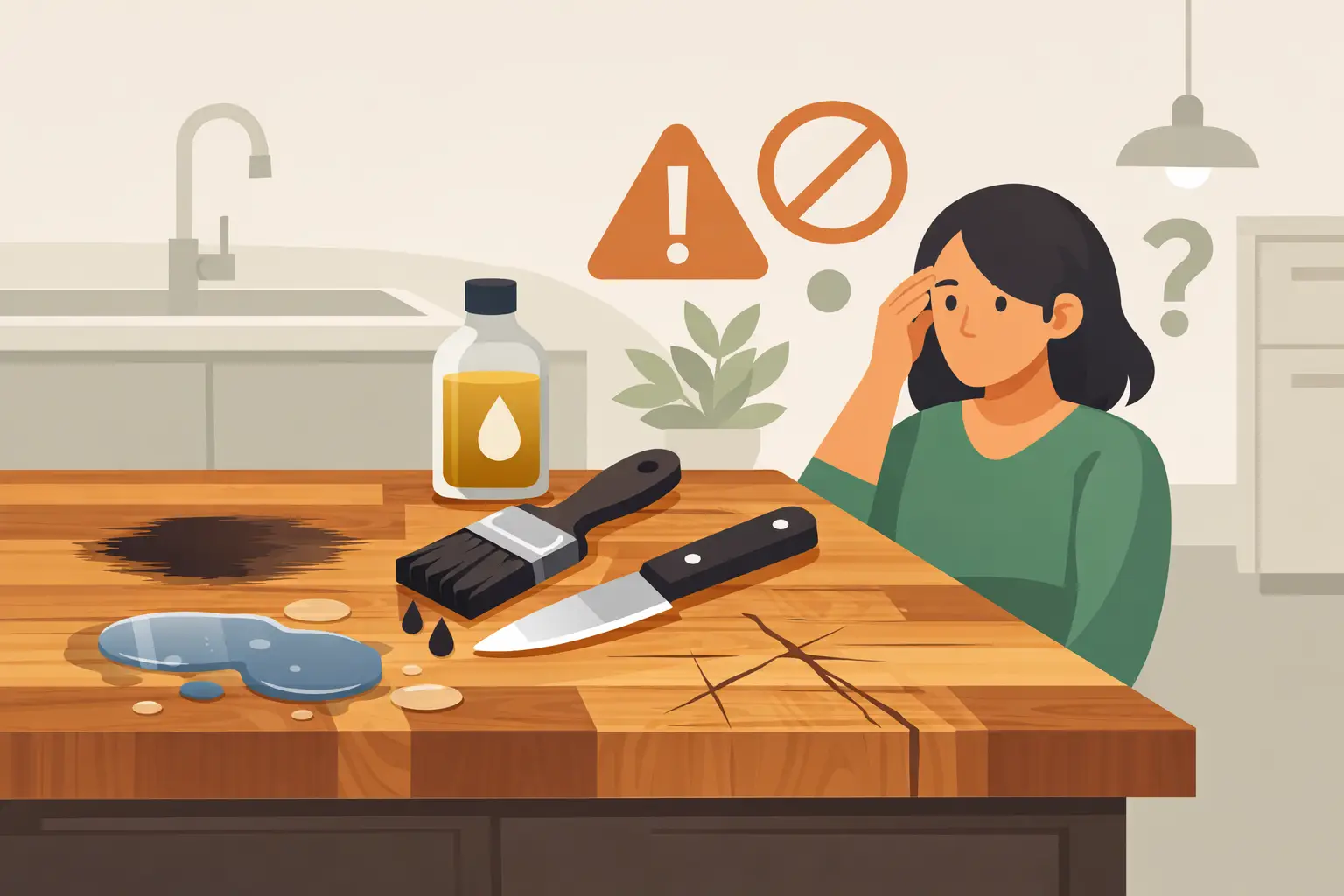
A butcher block countertop can make an ordinary kitchen feel built for the way you actually live. It brings warmth, real grain, and a surface that is never quite the same as anyone else’s. But the top butcher block countertop mistakes usually happen before the wood ever reaches the kitchen: a missed measurement, an unrealistic finish choice, or a plan that ignores water and movement.
Solid wood is durable, repairable, and full of character. It is not a sheet of stone or laminate that can be installed and forgotten. A successful wood countertop starts with matching the species, construction, finish, and installation details to the job at hand.
1. Ordering Before Measuring the Finished Space
The most expensive mistake is ordering from a rough cabinet layout rather than measuring the cabinets after they are installed and secured. Walls are rarely perfectly straight, corners are not always square, and a new cabinet run can shift slightly during installation. A countertop made to an early drawing may be beautifully built and still require trimming or leave an unwanted gap.
Measure the final cabinet footprint in several places, not just at the front edge. Record the longest depth, the overall length, and any variation from one end to the other. For an L-shape, island, or wall-to-wall installation, make a simple sketch with every relevant dimension, appliance clearance, overhang, seam location, and cutout clearly marked.
If your countertop will meet a wall, decide whether you want a small planned expansion gap covered by backsplash or trim. Do not assume wood should be forced tightly between two fixed surfaces. Custom work gives you the chance to get the fit right, but the shop can only build accurately from accurate final measurements.
2. Choosing Thickness by Looks Alone
A thick butcher block has a substantial, furniture-grade appearance. It can also add significant weight, affect drawer clearance, and require more support than a thinner top. Choosing a thickness solely because it looks good in a photo can create installation problems later.
Consider what sits beneath the top. A kitchen cabinet base provides more continuous support than a pair of decorative brackets. An island with seating needs an overhang designed around the span, the wood thickness, and whether hidden steel or corbels are needed. A desk, laundry counter, or floating surface has a different support requirement than a full cabinet run.
Thickness also changes the visual proportions of the room. A bold 1 1/2-inch or thicker top can look right over sturdy cabinetry, while a slimmer top may suit a lighter utility area. The best choice is the one that balances the look you want with the structure supporting it.
3. Treating Every Wood Species the Same
Maple, walnut, oak, cherry, and other hardwoods do not look, age, or perform exactly alike. Grain pattern, natural color variation, hardness, and pore structure all influence the final result. Choosing a species only from a small online image is risky, especially when the countertop is a major visual feature.
Walnut brings deep, rich color and a refined look, but its tone can lighten and shift with sunlight. Maple is bright and clean with a tighter grain, making it a popular choice for kitchens that need a lighter feel. Oak has pronounced grain and plenty of character. None is automatically better. The right species depends on your cabinetry, lighting, desired maintenance level, and tolerance for natural variation.
Expect a handcrafted wood surface to include changing grain direction, mineral streaks, knots when appropriate to the grade, and color differences from board to board. That is the material telling the truth. If a perfectly uniform surface is the goal, wood may not be the best fit.
4. Picking the Wrong Finish for the Way You Use the Top
Finish decisions should start with one question: will this be a food-prep surface, a general work surface, or a decorative counter? The answer matters more than a trend-driven sheen level.
A food-safe oil or oil-and-wax finish is a natural choice for a true cutting surface. It is easy to refresh and allows light scratches to be blended back in, but it requires regular care and offers less protection from standing water, wine, and oily spills than a film-building finish. A sealed countertop finish offers stronger resistance for a kitchen counter, bar, desk, or laundry surface, but it is not intended to be cut on like a chopping block.
One of the top butcher block countertop mistakes is expecting an oil-finished island to behave like sealed quartz around a sink. Another is putting a hard sealed finish on a top intended for knife work. Be honest about how the surface will be used, then choose the finish that supports that use.
5. Ignoring Water Exposure Around Sinks and Dishwashers
Wood and water can live in the same kitchen, but details matter. A sink cutout exposes end grain and fresh edges that need thorough sealing. Faucet holes, soap dispenser holes, dishwasher steam, and wet dish towels all create opportunities for moisture to reach areas that are easy to overlook.
Pay special attention to the underside around sink cutouts and the edge nearest the dishwasher. Water damage often begins where nobody sees it until the wood darkens, swells, or moves. Wipe up standing water promptly, avoid leaving wet mats on the counter, and make sure the installer follows the finish manufacturer’s guidance for all exposed edges.
An undermount sink can create a clean look, but it requires careful planning and professional-quality sealing. A drop-in sink covers more of the cut edge and can be a practical choice in a busy kitchen. Neither option is wrong. The installation needs to respect the material.
6. Failing to Plan for Seasonal Wood Movement
Every solid wood countertop expands and contracts across its width as humidity changes. This is normal. It is not a craftsmanship defect, and trying to prevent it by fastening the top rigidly in every direction can cause cracks, bowing, or stress at seams.
The countertop needs attachment points that hold it securely while allowing controlled movement. Installers often use slotted brackets, tabletop fasteners, or oversized holes with washers, depending on the cabinet design. Screws should not lock the wood so tightly that it cannot respond to seasonal humidity.
Wood movement is especially relevant for wide island tops, dry winter climates, and homes with big swings in indoor humidity. Keeping indoor conditions reasonably stable helps. So does finishing all faces of the countertop, including the underside, which slows uneven moisture exchange.
7. Assuming the Installer Will Handle Every Detail
A skilled installer is valuable, but they should not have to guess where an overhang ends, which edge profile you selected, or whether a top will be finished before or after cutouts. Clear communication prevents avoidable surprises.
Before installation day, confirm who is responsible for templating, carrying the top, making cutouts, sealing field-cut edges, attaching the countertop, and installing the sink. If the top is being finished on site, account for drying time and ventilation. If it arrives prefinished, protect the surface from tools, adhesive squeeze-out, and heavy objects during the rest of the renovation.
At Tooill Cabinets, custom dimensions are built around the details customers provide. A complete drawing and an early conversation about the installation plan make it far easier to create a piece that arrives ready for its intended job.
8. Skipping Routine Care Until There Is a Problem
Butcher block does not demand complicated maintenance, but it does reward attention. Clean spills with a damp cloth and mild soap, then dry the surface. Do not soak it, use harsh chemical cleaners, or leave wet items in one spot for days. Use trivets under hot pans, particularly if the finish is oil-based or waxed.
Oil-finished surfaces need reapplication when they begin to look dry, feel rough, or absorb water quickly. The schedule varies with use, climate, and the product used, so a busy prep area may need care more often than a lightly used bar top. Sealed finishes need less frequent maintenance, but scratches and worn spots should be addressed before moisture finds a path into the wood.
Small dents, knife marks, and worn areas are not the end of a wood countertop. One of its best qualities is that it can usually be cleaned up, sanded, and refinished rather than replaced.
Build Around Real Life, Not Just the Photo
The best butcher block countertops are not precious surfaces that make you nervous to cook, gather, or work around them. They are thoughtfully specified pieces of real wood, built for the room and cared for as part of the home. Start with final measurements, choose materials for your actual routine, and give the installation details the same attention as the grain. That is how a custom wood top earns its place for years.