
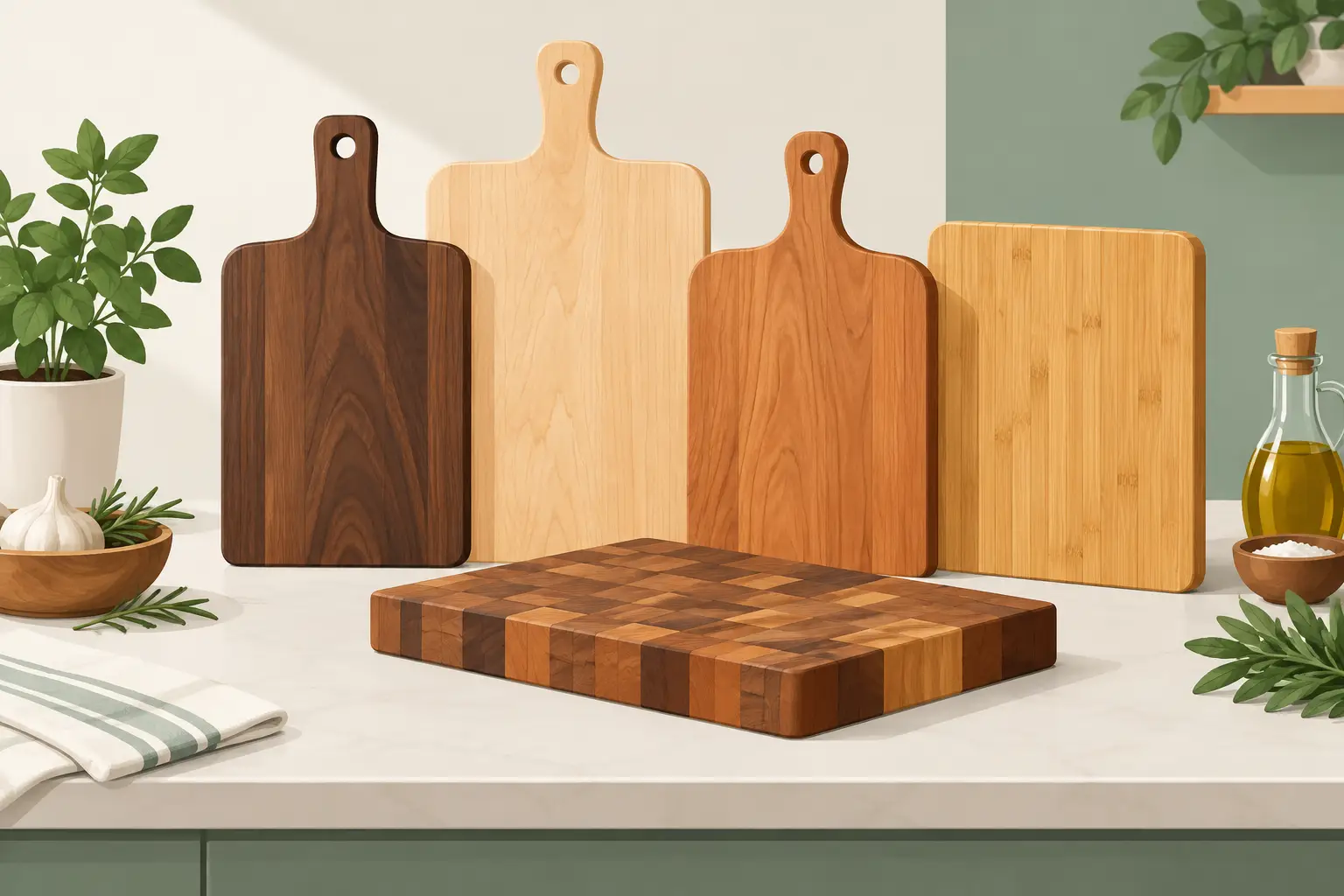
A cutting board earns its place the hard way: under sharp knives, hot pans, wet produce, and the daily cleanup that follows dinner. If you are asking what wood suits cutting boards, the best answer is a dense hardwood with a tight grain, good stability, and a surface that is kind to your knives. The right species also needs to fit how you cook and the look you want on your counter.
Maple is the classic choice for a reason, but it is not the only good one. Walnut brings deeper color, cherry warms beautifully over time, and a few other hardwoods can make excellent boards in the right hands. The key is choosing wood for performance first, then selecting the color and grain that makes the board feel at home in your kitchen.
What wood suits cutting boards best?
For most home kitchens, hard maple is the all-around benchmark. It is hard enough to resist deep knife marks, yet not so hard that it is punishing on knife edges. Its closed, subtle grain makes it less likely to hold moisture and food residue than more open-pored woods, and its pale color works with nearly any kitchen style.
Walnut is another excellent choice, especially for homeowners who want a rich, furniture-grade look. It is slightly softer than maple, but still durable enough for a well-made cutting board. That small difference can also make walnut feel a little gentler on knives. Its chocolate-brown color hides many everyday marks, although the contrast can make flour and light-colored food debris easier to see while you work.
Cherry sits between maple and walnut in appearance and hardness. Fresh cherry has a warm reddish-brown tone that gradually deepens with exposure to light. A cherry board is a strong choice for someone who wants character without the very dark look of walnut. It can show knife use a bit sooner than maple, but a properly maintained board remains useful and handsome for years.
None of these woods is automatically better in every situation. A board used every day for heavy prep may favor maple. A serving board that also sees occasional chopping may lean toward walnut or cherry for its visual impact. The best custom board is the one sized, built, and finished for the way you actually use your kitchen.
Why hardwood matters more than color
A cutting board should be made from hardwood, not just any attractive wood. Dense hardwood fibers stand up to repeated cuts while allowing the board to be refinished when it eventually collects normal wear. Softwoods such as pine, cedar, fir, and poplar dent too easily. They can develop deep grooves quickly, which are harder to clean and less pleasant to use.
Grain structure matters just as much as hardness. Tight-grained woods are generally better suited for food-prep surfaces because they are less absorbent than open-grained species. Maple, walnut, and cherry are reliable options because they balance density, workability, and grain structure well.
There is a common temptation to judge a board by hardness alone. That is only part of the picture. An extremely hard exotic species may resist marks, but it can be tougher on knives, more difficult to machine well, and more prone to movement if it is not properly dried and constructed. Good cutting-board wood should work with your knives, not win a contest against them.
Maple: the dependable workhorse
Hard maple, sometimes called sugar maple or rock maple, is the wood most people picture in a serious butcher block. It has a clean, light appearance and enough density for demanding daily use. Its visual consistency is especially useful if you want a board that looks neat beside white cabinets, stainless appliances, or a lighter butcher block countertop.
Maple does show stains and dark marks more readily than walnut. Beets, berries, turmeric, and heavily seasoned foods can leave temporary color behind if they sit on the surface. Regular washing, prompt drying, and food-safe board oil help keep it looking fresh. The trade-off is simple: maple gives you classic performance and a bright look, but it asks for routine care if you want it to stay looking nearly new.
Walnut and cherry: warmth with everyday function
Walnut is often chosen because it looks substantial before a knife ever touches it. The darker grain has natural variation, from deep brown to lighter caramel streaks, so each board has its own character. It pairs particularly well with black hardware, darker cabinetry, and kitchens that use natural stone or warm wood accents.
Because walnut is moderately hard rather than extremely hard, it can collect visible knife marks over time. Those marks are not a failure. They are the honest working surface of a real cutting board, and many owners prefer the lived-in patina. If you want to refresh the appearance later, light sanding and re-oiling can bring the surface back to life.
Cherry offers a different kind of warmth. Its color begins softer and often grows richer with age, meaning the board becomes more distinctive as it lives in your home. It is a practical, dependable hardwood, though it is best for buyers who appreciate a board that develops character rather than one that stays visually unchanged.
Other woods that can work, and woods to avoid
A few additional hardwoods can be suitable when carefully selected and properly built. Beech is a traditional cutting-board material with a light, even appearance and reliable hardness. Ash can be attractive and durable, though its more pronounced grain calls for thoughtful finishing and maintenance. Teak is naturally oily and moisture-resistant, but those oils can make glue-up and finishing more demanding, and its higher silica content may be harder on knife edges.
Some species are better left out of food-prep boards. Oak has open pores that can trap moisture and residue. Hickory and mesquite are very hard and can be rough on knives. Softwoods dent readily. Reclaimed lumber may carry old finishes, fasteners, contaminants, or unknown history, so it is not the right starting point for a board intended for food.
A beautiful species is not enough by itself. Board construction, moisture content, adhesive choice, sanding, and finish all affect whether the finished piece performs safely and lasts. That is why handcrafted cutting boards deserve more attention than a quick glance at the wood name on a product tag.
End grain, edge grain, and how you cook
The same wood behaves differently depending on how the board is constructed. Edge-grain boards show long strips of wood along the cutting surface. They are durable, attractive, and often a practical choice for everyday home use. They also tend to be lighter and more affordable than thick end-grain boards.
End-grain boards show the cut ends of the wood fibers on the surface. When a knife comes down, the fibers can separate slightly and then close back around the cut. This helps preserve the edge of the knife and can make the board more forgiving during long prep sessions. End grain requires more material and labor, so it is typically heavier and costs more.
For a compact board used for vegetables, sandwiches, and quick tasks, a quality edge-grain maple or walnut board is often exactly right. For a large prep station, serious knife work, or a statement piece for a kitchen island, end grain can be worth the investment. Size matters here too. A board should give you enough room to work without becoming so heavy that you avoid pulling it out.
Care is part of choosing the right wood
Even the best wood needs the right habits. Wash your board by hand with mild soap and warm water, then dry it promptly on edge so both sides can breathe. Never soak it, put it in the dishwasher, or leave it flat in standing water. Heat and uneven moisture are the usual causes of warping and cracking.
Apply food-safe mineral oil when the surface looks dry or faded. For boards that see frequent use, a conditioning blend with mineral oil and beeswax can add extra water resistance and a soft finish. Oil does not make wood waterproof, but it helps slow moisture exchange and keeps the grain from becoming thirsty and rough.
If your board feels uneven after years of use, it can often be resurfaced rather than replaced. That long service life is one of the best reasons to choose solid hardwood over a thin, disposable board. At Tooill Cabinets, that same respect for real material guides every handcrafted wood surface: build it well, care for it properly, and let it serve your home for a long time.
Choose maple when you want proven everyday performance, walnut when you want a darker statement piece, and cherry when you want warmth that deepens with age. Then give the board the size, construction, and regular care it deserves. A good cutting board should not feel like a kitchen accessory. It should feel like part of the way you cook.