
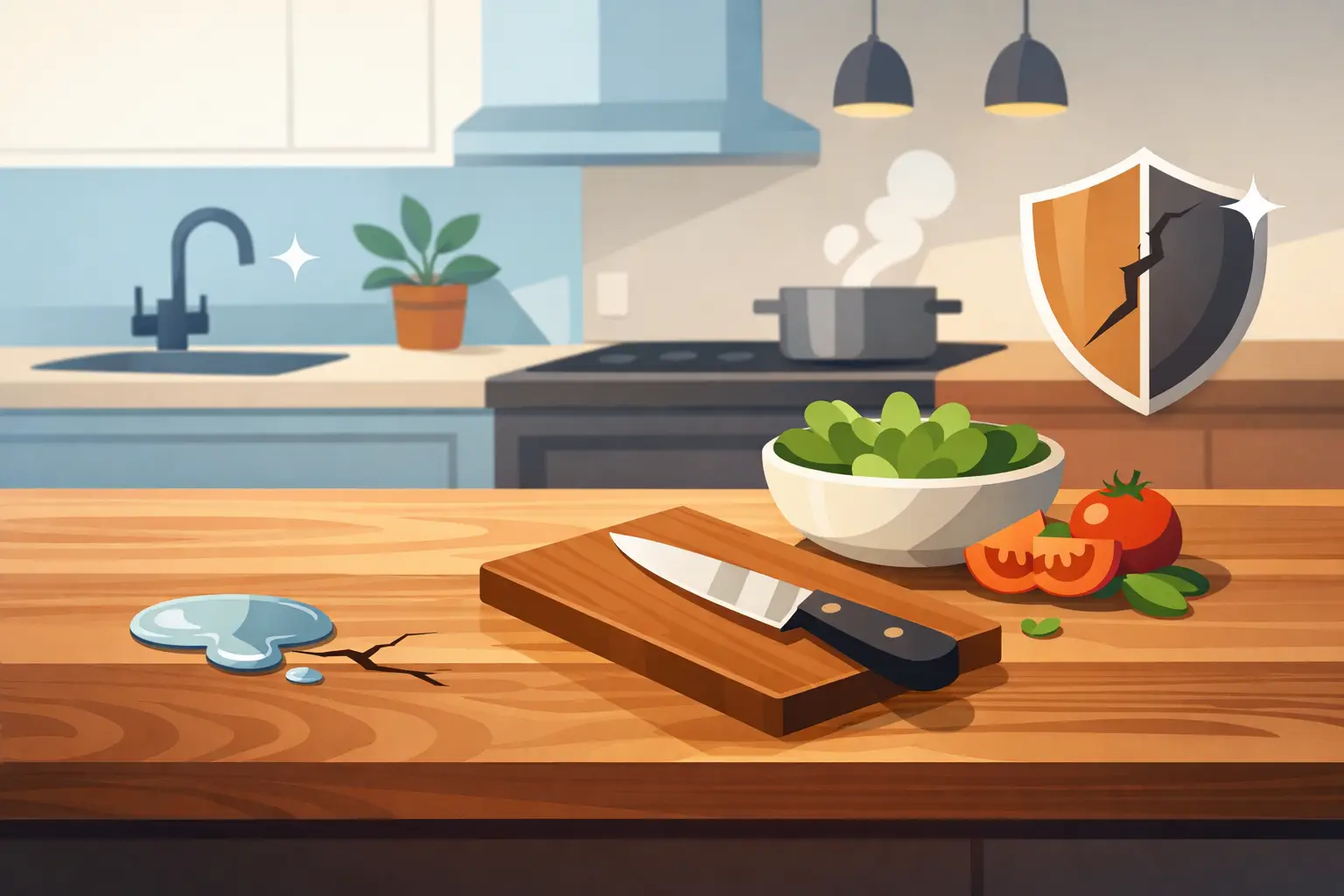
A lot of people love the look of wood, then hesitate right at the point of purchase. The question is fair: are wood countertops durable enough for a real kitchen, not just a picture-perfect one? If you cook often, have kids, host holidays, or simply do not want a fussy surface, durability matters more than style alone.
The honest answer is yes – wood countertops can be durable enough for everyday use when they are built well, installed correctly, and matched to the way you live. But they are not a zero-maintenance material, and they do not perform exactly like stone, laminate, or solid surface. Wood has strengths that make it a smart long-term choice, and it also has trade-offs you should understand before you buy.
Are wood countertops durable enough for daily use?
In many homes, absolutely. A properly made wood countertop handles daily prep, normal wear, and years of use better than some buyers expect. One reason is simple: solid wood is not a thin decorative layer. It is a substantial working surface that can be sanded, refinished, and renewed if life leaves marks behind.
That ability to be repaired is one of wood’s biggest advantages. A chip in laminate is there for good. A crack in some stone surfaces can be expensive and obvious. Wood, on the other hand, can often be cleaned up, re-oiled, re-finished, or lightly sanded to restore the top. For busy households, that matters.
Still, durable does not mean indestructible. Wood can dent under hard impact. It can stain if spills sit too long. It can move with changes in humidity. If someone wants a countertop they can ignore completely, wood may not be the best fit. If they want a real, hardworking surface that ages with character and can be maintained over time, wood is a very strong option.
What actually affects wood countertop durability?
Not all wood countertops perform the same. Durability depends less on the category of wood and more on how the top is made, what species is used, and how it is finished.
Wood species matters
Hard maple, walnut, white oak, and other quality hardwoods are popular for a reason. They offer a good balance of hardness, stability, and visual appeal. Maple is known for its tight grain and dependable performance in kitchens. Walnut is slightly softer, but many homeowners choose it because it wears gracefully and brings rich color. White oak has excellent strength and moisture resistance, which can make it a smart choice in active spaces.
A softer wood can still work, but it will show wear faster. That is not always a deal-breaker. Some buyers like a lived-in patina. Others want a cleaner, more uniform look for as long as possible. The right species depends on your priorities.
Construction quality matters just as much
A wood countertop is only as durable as its build. Glue-up quality, board selection, grain orientation, moisture content, and milling all affect long-term performance. If the wood is not properly dried and fabricated, movement and warping become more likely.
This is where handmade fabrication really matters. A well-built butcher block or plank top is designed to hold up in real conditions, not just look good out of the box. Craftsmanship is not marketing language here. It directly affects whether the countertop stays flat, stable, and strong over time.
The finish changes how the top behaves
There is a big difference between an oil finish and a film-building finish like polyurethane or varnish. An oil-finished top has a natural, touchable look and is easy to refresh, which is why many people love it for butcher block applications. But it needs regular maintenance and more attention around water and stains.
A sealed finish provides more upfront protection against moisture and daily messes. It is often the better fit for homeowners who want the warmth of wood with less routine upkeep. The trade-off is that when damage does happen, repair can be a little more involved than simply applying more oil.
How wood holds up against kitchen wear
The biggest concerns buyers usually have are water, heat, scratches, and food prep. Those concerns are valid, but none of them tells the full story on its own.
Water is probably the most important factor. Wood and standing moisture do not mix well, especially around sinks, seams, and poorly caulked areas. A quality finish helps, and so does basic kitchen discipline. Wipe up puddles, do not let wet dish towels sit in one spot, and keep sink edges dry. Most problems come from repeated neglect, not one accidental splash.
Heat is another area where expectations matter. Wood can handle normal kitchen use, but hot pans should not go directly on the surface. Trivets and pads are part of owning wood countertops. That is not unusual, but it is worth saying clearly.
Scratches and knife marks depend on how you use the surface. If it is a true chopping area, signs of use will show up. Some homeowners like that on a butcher block island. Others use cutting boards and preserve the cleaner look of the countertop itself. Wood is forgiving, but it is not a self-healing material.
As for stains, wood does better when spills are handled quickly. Wine, oil, beet juice, coffee, and acidic foods can leave marks if left too long. The good news is that many of those issues can be improved with maintenance instead of full replacement.
Are wood countertops durable enough compared to stone or laminate?
This is where the answer becomes more personal.
If your definition of durable means highly resistant to scratches, heat, and staining with very little maintenance, stone products may come out ahead in some categories. If your definition of durable means long-lasting, repairable, structurally sound, and able to be refreshed instead of replaced, wood makes a compelling case.
Laminate can be easy to live with at first, but once it is damaged, there is little you can do. Wood is different. It is a working material, and that is part of its value. Small dents, light wear, and finish changes are not always failures. In many homes, they are part of how the surface develops character.
That said, wood is not the right answer for every kitchen. In a high-moisture environment with poor ventilation and heavy neglect, it may become frustrating. In a home where people appreciate natural materials and do basic upkeep, it can last for many years and still look better with age.
Where wood countertops work best
Wood performs especially well on kitchen islands, coffee bars, laundry folding stations, desk areas, pantry worktops, and sections of kitchens where warmth and visual texture matter. It can also work beautifully for full kitchen runs when the homeowner is realistic about maintenance and chooses the right finish.
Around sinks, extra care is needed. That does not mean wood cannot be used there, but it does mean construction details and finish quality become even more important. In many projects, people mix materials – wood on the island, stone near the sink or range. That approach gives you the warmth of wood where it shines and a different surface where water and heat are more constant.
How to make wood countertops last longer
If you want wood countertops to perform well for the long haul, daily habits matter more than complicated maintenance routines. Wipe spills promptly. Use cutting boards for heavy chopping. Keep hot cookware off the surface. Follow the recommended care plan for the finish you choose.
It also helps to start with the right build from the beginning. Custom sizing, proper thickness, quality joinery, and a finish suited to the application all improve durability. That is one reason buyers often choose a made-to-order shop like Tooill Cabinets instead of settling for a mass-produced top that almost fits and may not be built for the demands of the space.
A countertop should fit the kitchen, but it should also fit the household. A family that cooks every night, a homeowner doing a full remodel, and someone updating a small apartment pantry may all need different solutions. Good woodwork accounts for that.
The real answer: durable enough for the right buyer
So, are wood countertops durable enough? Yes, for many homes they absolutely are. They are strong, repairable, practical, and capable of lasting for years when built from quality hardwood and cared for with reasonable consistency.
The better question is whether they are durable enough for your habits. If you want a natural surface that brings warmth, can be customized to your exact space, and rewards good care with a long service life, wood is a smart investment. If you want something you never have to think about, you may be happier with another material.
The best countertops are not the ones that win every category on paper. They are the ones that match the way you live, the way you cook, and the kind of home you are trying to build.