
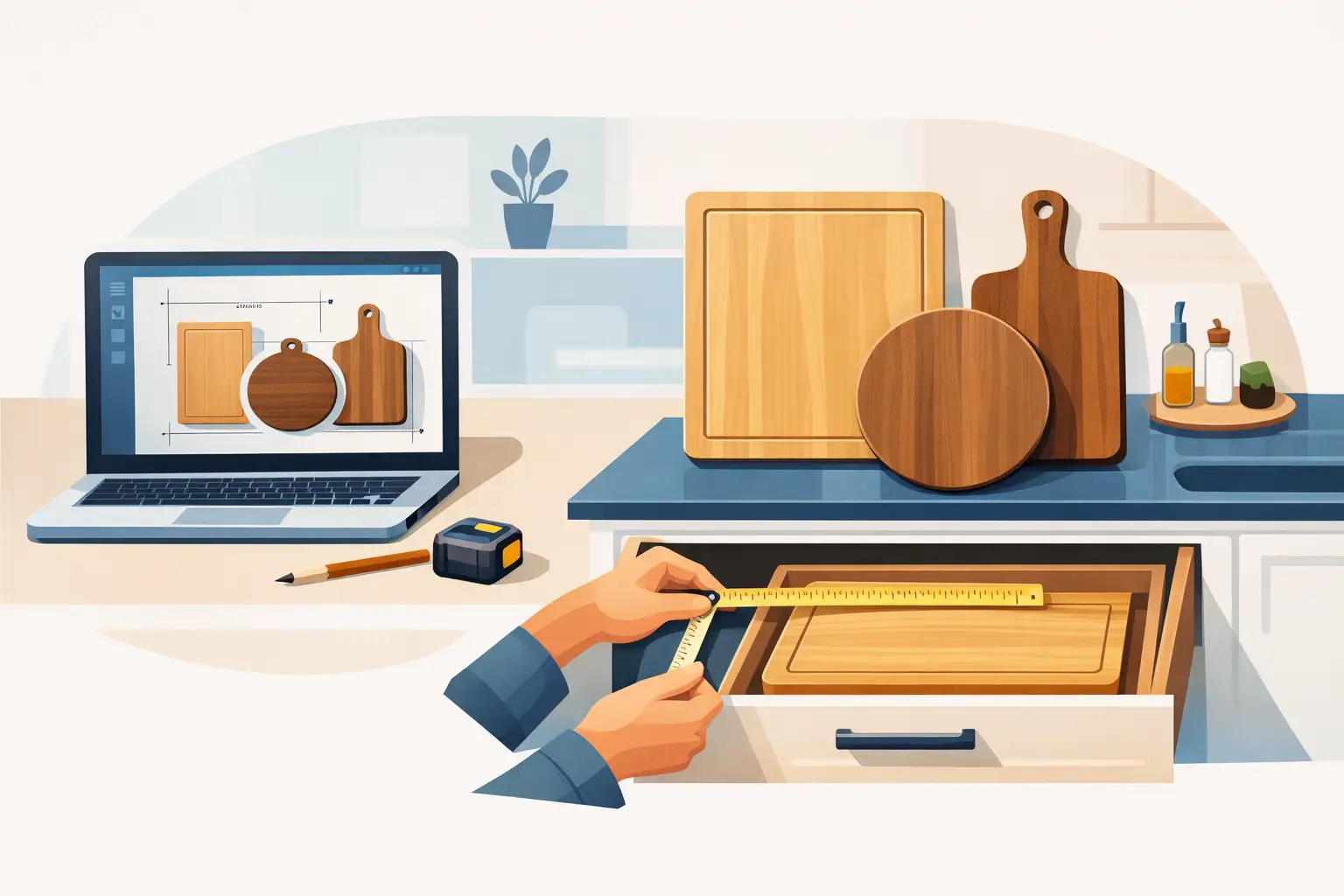
A cutting board that is too small leaves you balancing ingredients at the counter’s edge. One that is too heavy may stay in a cabinet instead of becoming part of your daily cooking routine. When you know how to order custom cutting boards, you can avoid both problems and choose a piece built for the way you actually prep, serve, and entertain.
A handmade board is not simply a larger version of a store-bought board. Wood selection, grain construction, thickness, edge treatment, and finish all affect how the board looks, feels, and holds up over time. The best custom order starts with a few practical decisions before you settle on the details.
Start With the Board’s Job
First, decide where and how the board will be used. A daily chopping board needs to be practical to lift, clean, and store. A board that lives on an island may be larger, thicker, and chosen as much for its appearance as its knife-friendly surface. A charcuterie or serving board has different priorities again: it may benefit from handles, a distinctive live edge, or a shape that suits the table.
Think about the ingredients you prepare most often. If you regularly chop vegetables, portion meat, and slice loaves of bread, a generous rectangular board gives you room to work without crowding the counter. If your kitchen is compact, a board sized to sit securely over a section of countertop can create useful prep space without becoming difficult to manage.
It also helps to decide whether the board will be stored away, displayed upright, or left on the counter. That answer influences not only the dimensions, but the wood species and overall style. A board you see every day should work with your cabinetry, countertops, and hardware while still being tough enough for real use.
Measure the Space Before Choosing a Size
Custom sizing is where a handcrafted board earns its keep. Measure the usable area of your countertop, island, or cabinet shelf, then leave enough clearance for the board to be picked up comfortably. If it will sit near a backsplash, range, or sink, account for those fixed elements too.
For a countertop board, consider the work zone rather than measuring the entire counter. You want enough room around the board to set down a bowl, sheet pan, or knife safely. For an insert-style board intended to fit a specific opening, measure more than once and provide the dimensions exactly as they were taken. A small measurement error matters more when a piece is made to fit a defined space.
Thickness deserves the same attention. A thinner board can be easier to move and store, while a thicker butcher block-style board offers a substantial feel and strong visual presence. More thickness also means more weight. For many kitchens, the right choice is a board substantial enough to stay put during chopping but not so heavy that it becomes inconvenient.
If you are unsure, share the intended use and available space with the maker. Clear communication early in the process is far better than trying to make a finished piece work in a space it was not designed for.
Choose Wood for Looks and Daily Use
Hardwoods are the standard for quality cutting boards because they are durable, stable, and easier on knives than hard synthetic surfaces. Maple is a longtime favorite for its clean, light appearance and dependable performance. Walnut brings rich brown tones and a more dramatic look. Cherry starts with warm reddish color and deepens naturally over time.
Each species has character, so there is no single best choice for every home. A light maple board can brighten a dark countertop. Walnut can create contrast in a white kitchen or blend beautifully with darker cabinetry. Cherry offers warmth in traditional, farmhouse, and transitional spaces.
Grain construction also changes the board’s appearance and working surface. Face-grain boards display broad, continuous wood grain and are often a good fit for serving or lighter kitchen tasks. Edge-grain boards show narrow strips of wood and balance durability with a classic butcher block look. End-grain boards display the ends of wood fibers in a checkerboard pattern and are prized by serious cooks for their thick, distinctive surface.
End grain is often the premium choice for frequent knife work, but it generally costs more and may be heavier. Edge grain is an excellent everyday option for many households. The right construction depends on your budget, visual preference, and how hard the board will be used.
Decide on the Details That Make It Yours
A custom board should solve real problems, not collect features for their own sake. Juice grooves are useful for carving cooked meats, slicing ripe tomatoes, or handling fruit. They are less necessary on a board used mainly for dry ingredients or serving. Built-in handles or finger holds make a larger board easier to carry, especially if it will move from kitchen to table.
Rubber feet can add stability and lift the board slightly off the counter, helping air circulate underneath. The trade-off is that feet create a designated top side, so you lose the option to flip the board over for a second cutting surface. If you want a fully reversible board, skip the feet and choose a clean, flat design.
Personalization can turn a useful kitchen piece into a meaningful housewarming, wedding, anniversary, or holiday gift. A name, date, family recipe, or simple monogram can be added without overwhelming the wood’s natural character. Keep the placement practical. Engraving on a serving side works well, while deeply engraved areas on the primary cutting surface may collect residue and see more wear.
When ordering from a custom shop such as Tooill Cabinets, provide your preferred wood, finished dimensions, thickness, features, and any personalization in one clear request. A reference photo can help communicate style, but written measurements and priorities are what allow the maker to build accurately.
Ask What Is Included in the Finish and Care
A quality cutting board should arrive sanded smooth and treated with a food-safe finish. Most wood boards need periodic care because wood responds to moisture and dry kitchen air. That is normal, not a flaw. Regular conditioning helps preserve the surface, reduce the chance of drying, and keep the grain looking its best.
Ask how the board is finished and what maintenance the maker recommends. Food-safe mineral oil and board wax are common care products. The board should be hand-washed with mild soap and dried promptly. It should never be soaked in water or put in a dishwasher, where heat and prolonged moisture can cause warping, cracking, or glue joint failure.
A large custom board may need occasional refinishing after years of use, particularly if it sees deep knife marks. That is one advantage of real hardwood: it can often be renewed rather than replaced. Light sanding and a fresh application of oil can bring back a well-loved surface.
Review the Quote Before You Approve It
Custom work is built to your specifications, so review every detail before production begins. Confirm the finished length, width, and thickness, along with wood species, grain style, edge profile, grooves, feet, handles, engraving, and any special fit requirements. Do not assume a feature is included because it appears in a sample photo.
Price is shaped by more than board size. Thicker stock, premium wood species, end-grain construction, detailed engraving, complex shapes, and added hardware all require more material or labor. A straightforward edge-grain maple board may be the best value for a hardworking kitchen, while a thick walnut end-grain piece can be worth the investment for a statement island or a lasting gift.
It is also reasonable to ask about lead time and shipping preparation. A well-made wood board deserves protective packaging, particularly when it is large or heavy. Knowing when to expect the piece helps you plan for a renovation deadline, celebration, or gift date.
Order With Confidence, Then Put It to Work
The strongest custom cutting board orders are specific without being overcomplicated. Start with the space, choose a size you will use comfortably, select a hardwood you genuinely like, and add only the details that improve your experience. A maker can guide the technical choices, but your daily kitchen habits should lead the design.
Once it arrives, give the board a place where it will be easy to reach and easy to enjoy. The right handmade board does more than protect your countertops. It becomes the surface where weeknight meals, holiday prep, fresh bread, and shared plates come together.