
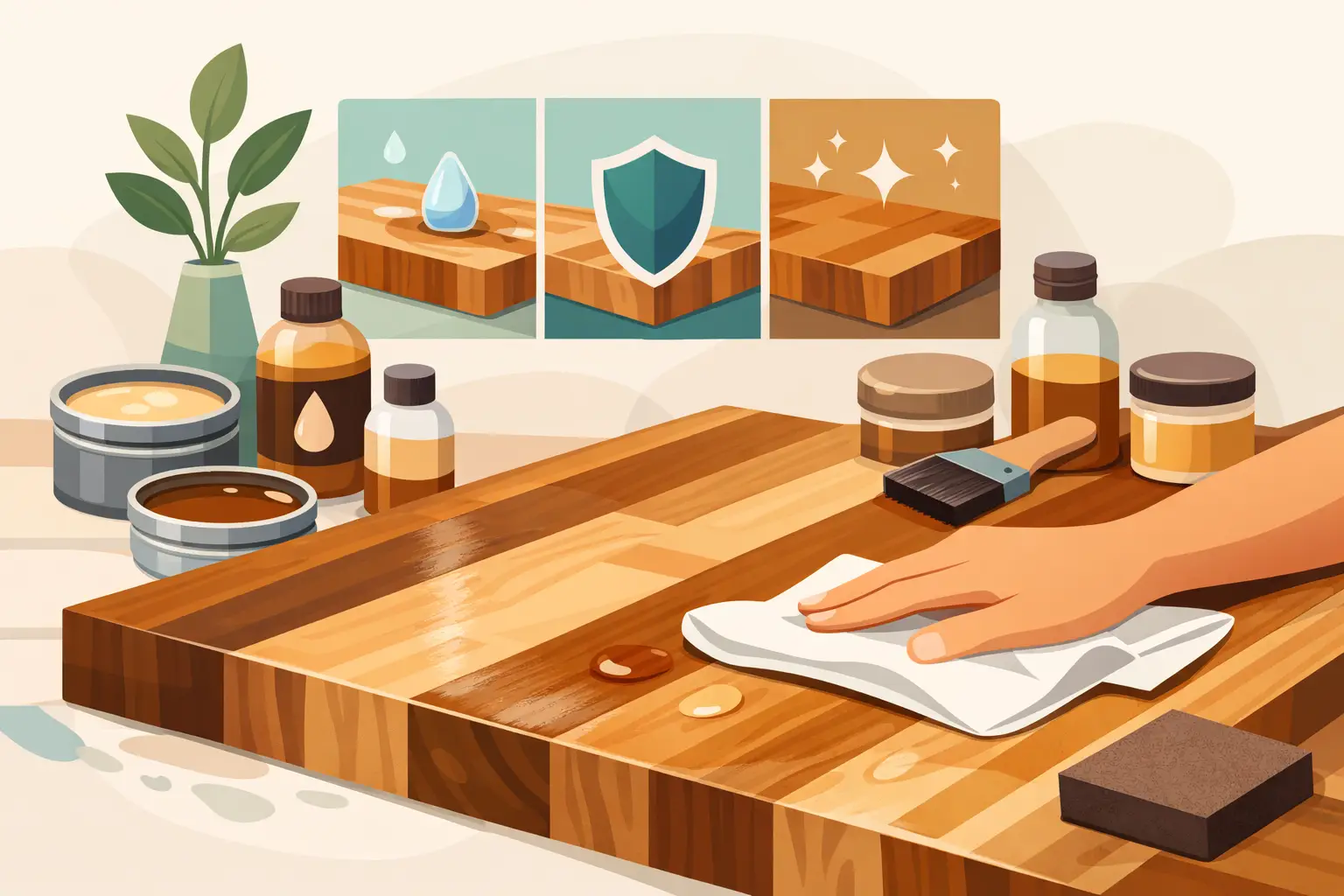
A beautiful butcher block can be ruined by the wrong finish long before the wood itself wears out. The right choice depends on how the surface will be used, how much maintenance you are comfortable with, and whether knives will touch it. This guide to butcher block finishes separates the practical options from the marketing language, so you can choose protection that fits your home.
A finish does more than change the color of wood. It affects water resistance, stain resistance, scratch repair, sheen, feel, and long-term upkeep. No single finish wins in every category. A cutting board needs a very different approach than a kitchen island where no one will ever chop vegetables directly on the surface.
Start With How the Butcher Block Will Be Used
Before selecting a finish, decide whether your wood surface is a true cutting surface or simply a countertop, table, shelf, or island top. This distinction matters more than the species, color, or room.
A cutting board, butcher block prep station, or countertop intended for regular knife work needs a penetrating finish that can be renewed without creating a hard coating that chips under a blade. Food-grade mineral oil is the classic answer. It soaks into the wood instead of forming a film on top, and it is easy to reapply when the surface looks dry.
A countertop used for serving, baking, dining, or everyday kitchen work often benefits from a more protective finish. Spills, coffee rings, grease, and wet glasses are easier to manage with a cured hardwax oil or a protective film finish. These options are less forgiving when damaged, but they reduce routine maintenance.
Think honestly about your household. A family kitchen with frequent spills may prioritize stain resistance. A serious home cook who wants to cut directly on an island may accept more oiling in exchange for a renewable surface. There is no wrong answer, but there is a wrong finish for the job.
Guide to Butcher Block Finishes: The Main Options
Food-Grade Mineral Oil
Mineral oil is the traditional finish for cutting boards and knife-friendly butcher block. It is clear, odorless, non-drying, and readily available. Because it does not cure into a hard layer, it will not crack or flake when the surface is cut on.
Its biggest advantage is repairability. When the wood begins looking pale, dry, or rough, clean the surface, let it dry completely, and apply more oil. Light scratches tend to blend in over time, especially after sanding and re-oiling.
The trade-off is maintenance. Mineral oil does not create a strong barrier against standing water, wine, or deeply colored foods. A busy cutting board may need oil monthly at first, then every few months depending on use and humidity. It is a practical choice, not a maintenance-free one.
Mineral Oil and Beeswax Conditioner
Many wood conditioners combine mineral oil with beeswax or another food-contact-safe wax. The oil replenishes the wood while the wax adds a little more water resistance and a soft, hand-rubbed sheen.
This is an excellent follow-up treatment for cutting boards, serving boards, and butcher blocks finished with mineral oil. It is not usually a substitute for the first deep oiling of dry wood. Start with mineral oil, allow it to absorb, then use conditioner as a protective top treatment.
Wax can leave a slightly more polished feel, but it will still wear away with washing and use. It is best for owners who appreciate the ritual of caring for real wood rather than expecting it to behave like laminate.
Hardwax Oil
Hardwax oil is a popular option for butcher block countertops, table tops, island tops, and other wood surfaces that are not used as primary cutting boards. It penetrates the wood while also leaving a thin, cured layer near the surface. The result is a natural-looking finish with better water and stain resistance than mineral oil.
Many homeowners like hardwax oil because it preserves the warmth and texture of wood. It typically looks less plastic-like than a thick polyurethane coating, and localized scratches can often be repaired with careful sanding and reapplication.
Not all hardwax oils are the same. Cure times, sheen levels, durability, and food-contact claims vary by manufacturer. If the surface will be used for food preparation, follow the specific product instructions and allow the full cure time before use. For direct knife work, mineral oil remains the safer, more practical route.
Polyurethane and Other Film Finishes
Polyurethane, varnish, and similar film-building finishes create a protective layer over the wood. They offer strong resistance to moisture, stains, and daily household wear, especially on dining tables, desks, shelves, and utility surfaces.
For a butcher block countertop that will not be cut on, a film finish can be a smart low-maintenance choice. It is particularly useful near sinks, coffee stations, or areas where water exposure is likely. Water-based products generally dry clearer and have less ambering, while oil-based finishes can deepen the wood color and create a warmer look.
The downside is that scratches, chips, and worn spots are more noticeable. A damaged film finish often requires sanding a larger area to make the repair disappear. Never use polyurethane on a surface intended for regular chopping. Knives will damage the coating, and a compromised coating is difficult to keep looking clean.
Choose the Look You Want Before You Commit
Finishes change wood color, often more than people expect. Mineral oil and oil-based products usually make grain appear richer and darker, similar to the look of wood after it gets wet. Maple may turn warmer and more honey-toned. Walnut may gain depth and contrast. White oak can take on a more golden cast with certain oils.
Water-based film finishes tend to keep lighter woods closer to their unfinished color, though the result still depends on the wood itself. Hardwax oils are available in clear and tinted versions, but sample testing is always wise. End grain, edge grain, and face grain can absorb finish differently, even within the same piece.
If you are ordering a custom butcher block, discuss the intended finish and final color early. A handcrafted countertop is built around your dimensions and style, and the finish is part of the finished design, not an afterthought.
Preparation Makes the Finish Work Better
Even the best finish cannot compensate for a rushed surface. Before finishing, the wood should be sanded evenly, with dust removed from joints, pores, and edges. Skipping preparation can leave rough patches, visible sanding marks, or areas that absorb finish unevenly.
For a new unfinished butcher block, allow the wood to acclimate to the room where it will live before final installation when possible. Wood naturally expands and contracts as humidity changes. Proper installation hardware and room for seasonal movement are just as important as the finish on top.
When applying a penetrating oil, use enough to wet the surface evenly, paying special attention to end grain and cutouts around sinks. Let it absorb according to the product directions, then wipe away excess. Leaving puddles of oil on the surface does not provide extra protection. It can create a sticky finish instead.
With hardwax oil or polyurethane, follow the recommended coat count, dry time, and sanding instructions exactly. More product is not always better. Thin, even coats cure more reliably and look more professional than a heavy coat applied too quickly.
Care Depends on the Finish
For mineral-oiled cutting surfaces, clean with mild soap and a damp cloth, then dry promptly. Do not soak the wood or put it in the dishwasher. Re-oil when the board looks dry or water stops beading on the surface. If odors or stains linger, a light sanding followed by fresh oil can bring the wood back to life.
For hardwax oil and film-finished countertops, use a soft cloth and a gentle cleaner suitable for finished wood. Avoid harsh degreasers, abrasive scrubbers, and cleaners that leave residue. Wipe spills quickly, especially around sink seams, faucet holes, and backsplash joints.
Heat deserves attention regardless of finish. Wood is more forgiving than stone in some ways, but hot pans can leave marks, soften wax, or stress a protective coating. Use trivets. Likewise, do not leave wet dish towels or plant pots sitting in one spot for days.
When Refinishing Is Worth It
A few surface scratches do not mean a butcher block has failed. Solid wood is one of the few countertop materials that can be renewed rather than replaced. Light wear may only need cleaning, fine sanding, and a maintenance coat. Deep gouges, water staining, or a failing film finish may call for a more complete sanding and refinish.
If the surface is a custom island top, dining table, or countertop, identify the existing finish before adding anything new. Mineral oil cannot be applied over a sealed polyurethane surface and expected to soak in. Wax also can interfere with adhesion if you later decide to use a film finish. When in doubt, test a hidden area first.
A well-made butcher block earns its character over time. Choose a finish that matches the way you actually live, give it the care that finish requires, and your wood surface can stay useful and beautiful for years instead of becoming another short-lived renovation decision.