
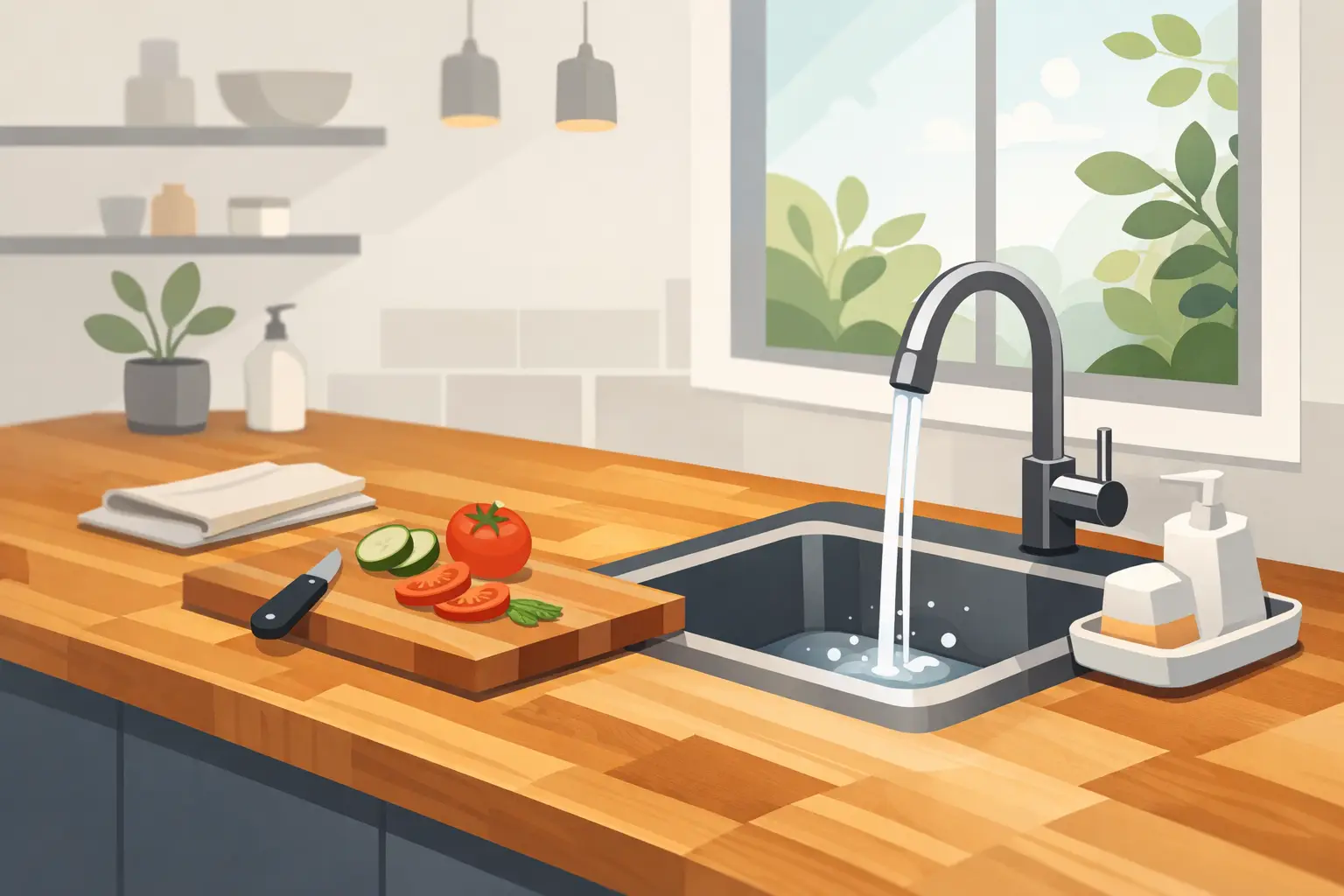
A lot of people love the look of wood countertops right up until they picture the sink. That is usually the moment the question comes up: can butcher block go near sink areas without turning into a maintenance headache? The honest answer is yes, but only if it is built, finished, and cared for with that location in mind.
We work with wood every day, and the sink is one of the few spots in a kitchen where details really matter. Butcher block can look incredible beside or around a sink, and plenty of homeowners use it that way successfully for years. The difference is not luck. It comes down to species, construction, finish, installation, and how realistic you are about water exposure.
Can butcher block go near sink spaces?
Yes, butcher block can go near a sink. It just should not be treated like stone, laminate, or stainless.
Wood is a natural material. That is part of the appeal. It has warmth, character, and a handmade feel that manufactured surfaces cannot fake. But wood also moves with changes in moisture and humidity, and sink areas create more splashing, pooling, and wet dishes than almost anywhere else in the kitchen.
That does not make butcher block a bad choice. It simply means the area around the sink needs smarter planning than the dry stretch of counter between the range and pantry.
If you want a wood top that performs well near water, you need to think beyond appearance. You are choosing a living material that rewards proper finishing and regular care.
What makes the sink area harder on wood?
Most countertop wear is gradual. Sink wear is repetitive and concentrated.
You have standing water around the faucet base, drips running off pots and glasses, damp sponges left on the surface, and occasional overflow around the sink rim. If the countertop is not sealed well, or if water sits too long in one spot day after day, the wood can darken, swell, raise grain, or eventually split at weak points.
The cutout itself is another vulnerable area. Once a sink opening is made, you expose fresh wood grain inside that opening. If those edges are not sealed carefully, moisture can work its way in faster than many homeowners expect.
This is why butcher block near a sink is less about whether wood can survive there and more about whether the fabrication and finishing were done with care.
The best conditions for butcher block near a sink
Butcher block does best near a sink when the top is made from quality hardwood, finished with a water-resistant film finish, and installed so water cannot sit at seams, edges, or cutouts.
Closed-grain and durable species tend to be a better fit than softer, more porous woods. Construction quality matters too. A well-made glue-up with tight joinery and stable stock will handle kitchen use better than a poorly made panel with inconsistent moisture content.
Finish is the biggest factor for most homeowners. Around sinks, a penetrating oil finish gives a more natural look, but it usually asks more of the owner. It needs ongoing attention and more frequent reapplication. A film-forming finish, such as a durable polyurethane or similar protective coating designed for countertops, creates a stronger moisture barrier. For sink zones, that extra protection is often worth it.
Undermount sink installations raise the bar even further. They can look clean and high-end with butcher block, but the exposed interior edge around the sink cutout must be sealed exceptionally well. Drop-in sinks can be a little more forgiving because the rim covers the cut edge, though proper sealing still matters.
Finish matters more than most people think
If you are asking whether butcher block belongs near a sink, you are really asking whether the finish can stand up to water.
Food-safe oil finishes are popular because they are easy to refresh and keep the wood looking natural. They are great for prep surfaces and cutting areas, especially if you want to sand and re-oil over time. Near a sink, though, they require discipline. If you miss maintenance or let water sit too often, the top will show it.
A sealed top with a hard protective finish is usually the better option for a sink run. It gives you a stronger shield against everyday splashes and makes cleanup easier. That does not mean it is invincible. If the finish gets scratched through or worn down at the sink edge, it should be addressed before water starts reaching bare wood.
For many kitchens, the practical answer is simple: choose the finish based on how you live. If you want the lowest maintenance setup possible, a fully sealed butcher block is the safer choice near a sink.
Signs a sink-side butcher block will last
A good butcher block installation near a sink usually has a few things in common. The wood has been acclimated properly, the sink cutout is sealed on every exposed surface, the faucet area is protected, and the homeowner understands basic maintenance.
It also helps when the sink area is designed to shed water instead of trap it. Even small details matter. A bead of caulk where needed, a well-fitted sink, and attention to seams can add years to the life of the top.
This is where custom fabrication can make a real difference. A handcrafted top built for the exact sink layout, overhang, and edge profile is easier to protect than a one-size-fits-all panel that gets cut down after the fact.
Where problems usually start
Most failures are not because butcher block was near a sink. They happen because water was allowed to sit on unprotected or underprotected wood over and over again.
The usual trouble spots are around faucet holes, at the sink cutout, along the seam where the sink meets the countertop, and in corners where wet items get parked daily. If someone leaves a soaked dish mat on the wood, keeps soap dispensers dripping in one spot, or ignores finish wear for months, the surface will eventually respond.
That response might be mild at first. A little raised grain or darkening can seem cosmetic. Left alone, though, those early signs can turn into deeper moisture damage.
Daily care is simple, but it matters
Living with butcher block near a sink does not mean constant work. It does mean paying attention.
Wipe standing water when you see it. Do not leave wet rags, sponges, or trays sitting on the surface for long stretches. Clean with a mild soap and damp cloth instead of soaking the area. If your top has an oil finish, stay on schedule with re-oiling. If it has a film finish, inspect high-use spots now and then for wear or scratches.
That is really the trade-off. You get warmth and natural character that stone cannot offer, but in return, you give the surface some routine care.
For many homeowners, that trade feels more than fair.
Is butcher block near a sink right for your kitchen?
It depends on your habits as much as your style.
If you love the look of real wood, keep your kitchen reasonably dry, and do not mind basic upkeep, butcher block near a sink can be a beautiful and durable choice. If your sink area sees constant standing water, heavy abuse, or minimal maintenance, you may want to limit wood to nearby sections rather than the full sink run.
Some homeowners split the difference and use butcher block on islands, peninsulas, or dry prep zones while choosing another material directly at the sink. Others use butcher block throughout and have no regrets because the tops were properly built and sealed from the start.
Neither approach is wrong. The right choice is the one that fits how your kitchen actually gets used.
A smart way to buy butcher block for sink areas
If the sink is part of the plan, do not shop for butcher block like it is just a decorative slab. Ask how the top will be finished, how sink cutouts are handled, what wood species is being used, and what maintenance will be expected once it is installed.
That is where a made-to-order shop has an advantage. A custom builder can fabricate around your exact sink setup and help you choose a finish based on real use, not just showroom appearance. At Tooill Cabinets, that kind of practical fit matters because a good-looking top only counts as a good purchase if it also works in daily life.
If you want wood near the sink, the best results come from respecting what wood is. It is not fragile, but it is not foolproof either. Build it right, seal it right, and treat it like a handcrafted surface instead of an indestructible one, and it can reward you every time you walk into the kitchen.