
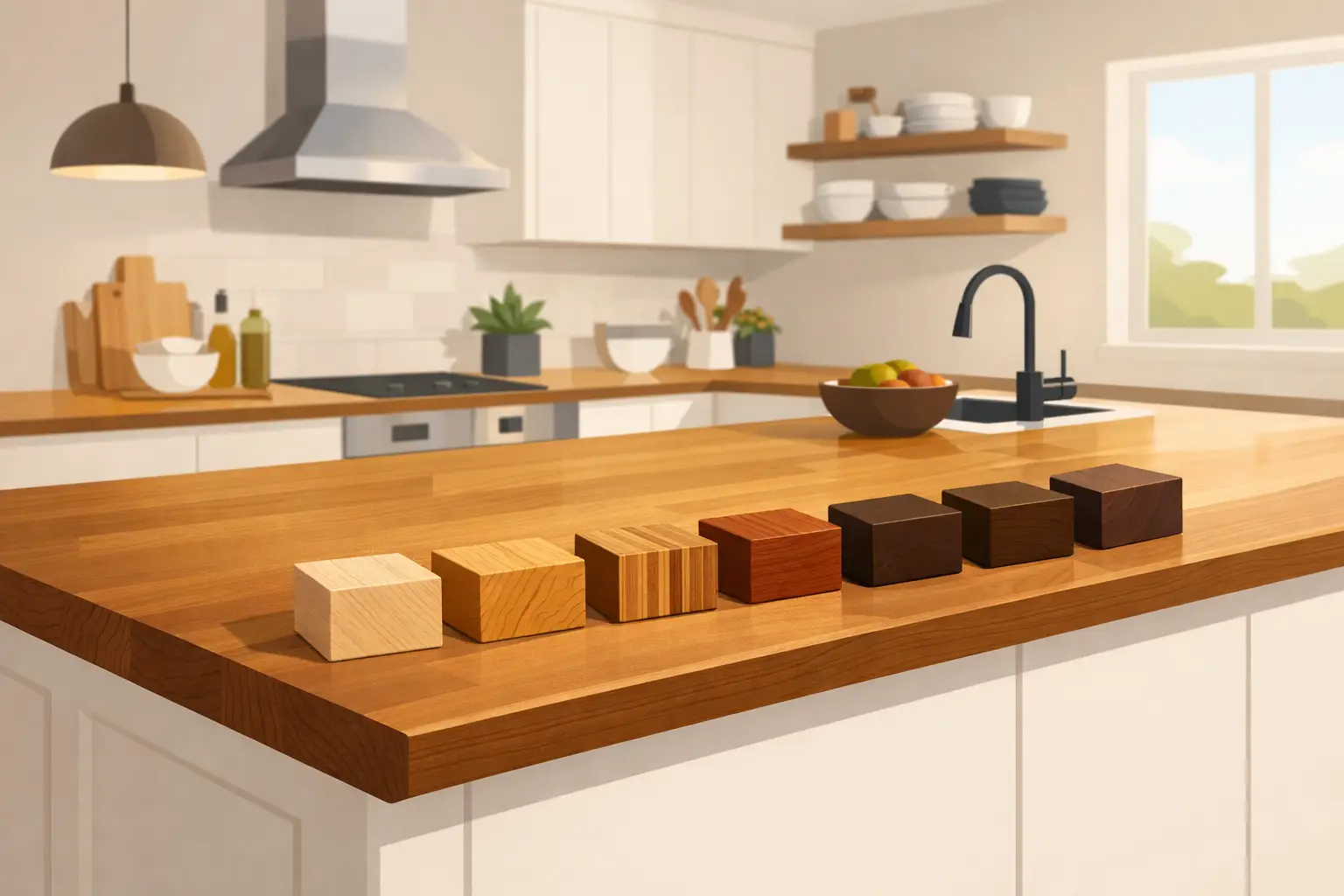
A kitchen island gets touched more than almost any other surface in the house. It catches grocery bags, homework, coffee cups, party platters, and the occasional rushed dinner prep. That is why choosing among the best woods for island tops is about more than picking a color from a photo. The right species needs to suit how you use the kitchen, how much maintenance you are comfortable with, and the look you want to live with every day.
A solid wood island top brings warmth that stone and laminate cannot duplicate. It also earns character over time. Small marks, shifts in tone, and a well-kept finish become part of the piece. The key is choosing a wood that will wear the way you want it to.
What Makes a Wood Good for an Island Top?
No single wood is perfect for every kitchen. A busy family kitchen may call for a hard, forgiving species with an easy-care finish. A showpiece island in a quieter kitchen may be all about dramatic grain and rich color. Budget, thickness, edge profile, and whether you plan to cut directly on the surface also matter.
Hardness helps a top resist dents, but it is not the whole story. Grain pattern affects how scratches show. Natural movement matters because wood expands and contracts with seasonal humidity changes. A properly built island top needs to be installed in a way that allows for that movement rather than being locked rigidly in place.
Finish is equally important. A food-safe hardwax oil or conditioning oil gives wood a natural, touchable feel and makes spot repairs simple, but it needs periodic care. A film-building finish offers more protection against spills and everyday moisture, though repairing a deep scratch may take more work. The best choice depends on whether your island is a work surface, a serving space, or both.
1. Hard Maple: The Classic Workhorse
Hard maple is one of the best all-around choices for an island top, especially if the island will see serious kitchen use. It is dense, light in color, and known for a clean, even grain. This is the traditional choice for butcher block for good reason: it holds up well to daily wear without feeling overly rustic or busy.
Its pale cream tone works especially well in bright kitchens, modern farmhouse spaces, and designs that need contrast against darker cabinets. Maple can show stains if spills are left sitting, and its subtle grain does not hide scratches as easily as a more figured wood. Still, it can be refinished or refreshed for many years of service.
Choose hard maple when durability, a clean look, and a classic butcher block feel are at the top of your list.
2. Walnut: Rich Color and Statement Grain
Walnut brings instant depth to a kitchen. Its chocolate-brown heartwood, flowing grain, and occasional lighter streaks make every top feel distinct. For homeowners who want the island to become a focal point, walnut is hard to beat.
Walnut is softer than hard maple, so it will show dents and knife marks sooner in a hard-working kitchen. That is not necessarily a drawback. Many people love the softened, lived-in patina walnut develops over time. It is also stable, works beautifully in wide custom tops, and looks exceptional with a clear oil finish that lets the color speak for itself.
Walnut is usually a premium investment, both because of material cost and its visual appeal. It fits kitchens with white, cream, black, navy, or natural wood cabinetry and pairs naturally with brass, bronze, or matte black hardware.
3. White Oak: Durable, Textured, and Timeless
White oak has become a favorite for kitchen islands because it offers a practical balance of strength and personality. It is hard enough for everyday use, and its visible open grain gives it warmth without the dark, formal feel of walnut. It can look traditional, modern, Scandinavian, or coastal depending on the stain and finish.
One advantage of white oak is how well it handles a little real life. Its grain helps disguise minor wear, and it takes many finish colors well. Natural white oak has a warm, tan cast, while lighter finishes can create the popular soft, neutral look many homeowners want.
Because white oak has open pores, a quality finish matters. If you want a very smooth, glass-like surface, the grain may need filling. If you prefer texture and a handmade appearance, leaving some grain character visible is part of the appeal.
4. Red Oak: Practical Character at a Lower Cost
Red oak is often a smart option when you want the recognizable grain of oak with a more budget-conscious price point. It is strong, readily available, and visually active, with a warmer undertone than white oak. In the right kitchen, it has plenty of character.
The trade-off is that red oak’s pronounced grain and reddish cast are more specific stylistically. It may not be the first choice for a cool-toned or ultra-minimal kitchen, and it is generally less moisture-resistant than white oak. With a properly applied finish and normal kitchen care, however, it can make a handsome, durable island surface.
Red oak is worth considering for a utility island, a warm traditional kitchen, or a custom project where material budget needs to go further.
5. Cherry: Smooth, Warm, and Better With Age
Cherry has a fine, smooth grain and a naturally warm reddish-brown tone that deepens with exposure to light. A new cherry island top may start lighter than expected, then gradually develop a richer, more settled color. That changing appearance is one of the reasons people choose it.
It is not as hard as maple or oak, so cherry is better suited to an island used for dining, gathering, and light prep rather than heavy chopping. It also shows a refined, furniture-grade look that works beautifully in classic homes, craftsman kitchens, and spaces with warmer cabinetry.
If you want a wood top that feels less like commercial butcher block and more like a handcrafted piece of furniture, cherry deserves a close look.
6. Hickory: Maximum Toughness and Natural Variation
Hickory is among the hardest domestic hardwoods commonly used for island tops. It is a strong choice for active households, especially when resistance to dents is a priority. Its appearance is bold: hickory often includes dramatic shifts from pale sapwood to darker brown heartwood, plus knots and lively grain.
That variation is either exactly what you want or not at all. A hickory top will not have the uniform look of maple or the controlled elegance of walnut. It has a more rugged, natural presence. It can also be harder to machine and finish because of its density and varied grain.
Use hickory when you want a hardworking top with unmistakable natural character. It is especially at home in rustic, cabin-inspired, farmhouse, and industrial kitchen designs.
7. Ash: Bright, Strong, and Underused
Ash is a strong, attractive hardwood with a light color and open grain that resembles oak but often looks cleaner and more linear. It offers a good middle ground for homeowners who want a pale wood with visual texture. It is also tough enough for regular kitchen use.
Ash is less common than maple, walnut, and oak, which can make it feel more custom. Availability can vary by region and supplier, so it is worth discussing early if you have a specific dimension or timeline in mind. When available, it is an excellent choice for a bright island that needs more grain definition than maple provides.
Choosing the Best Wood for Your Kitchen
For a practical, hard-working prep island, hard maple and white oak are usually the safest starting points. For a darker statement piece, walnut brings warmth and depth that no stain can fully imitate. For a rustic kitchen where toughness and variation are part of the design, hickory is a natural fit. Cherry works best when you want a smooth, furniture-like surface that will develop richer color over time.
It also helps to think about the whole room rather than the board by itself. A small kitchen can benefit from maple, ash, or a lighter white oak finish because they keep the room open. In a large kitchen with light cabinets, a walnut island can create the visual anchor the space needs. If cabinet samples, flooring, and hardware are available, compare them beside an actual wood sample before finalizing the species.
Build Details Matter as Much as Species
Even the best wood can disappoint if the top is built without attention to the details. Board selection, grain matching, glue-up quality, thickness, sanding, and finish all affect how an island top looks and performs. End-grain construction is ideal for a dedicated cutting surface, while edge-grain and face-grain tops are common for islands because they create a cleaner furniture-style appearance.
A custom-made top also solves the problems standard retail sizes cannot. You can choose the exact overhang for seating, the thickness that fits the cabinet base, the edge profile that matches the room, and a finish suited to your household. At Tooill Cabinets, that made-to-order approach lets the wood, dimensions, and details work together instead of forcing your kitchen to fit an off-the-shelf slab.
Before choosing, be honest about how you want the island to age. If a few marks would bother you, choose a harder wood and a protective finish. If you appreciate the story of a well-used surface, choose the species whose natural color and grain make everyday life look even better.