
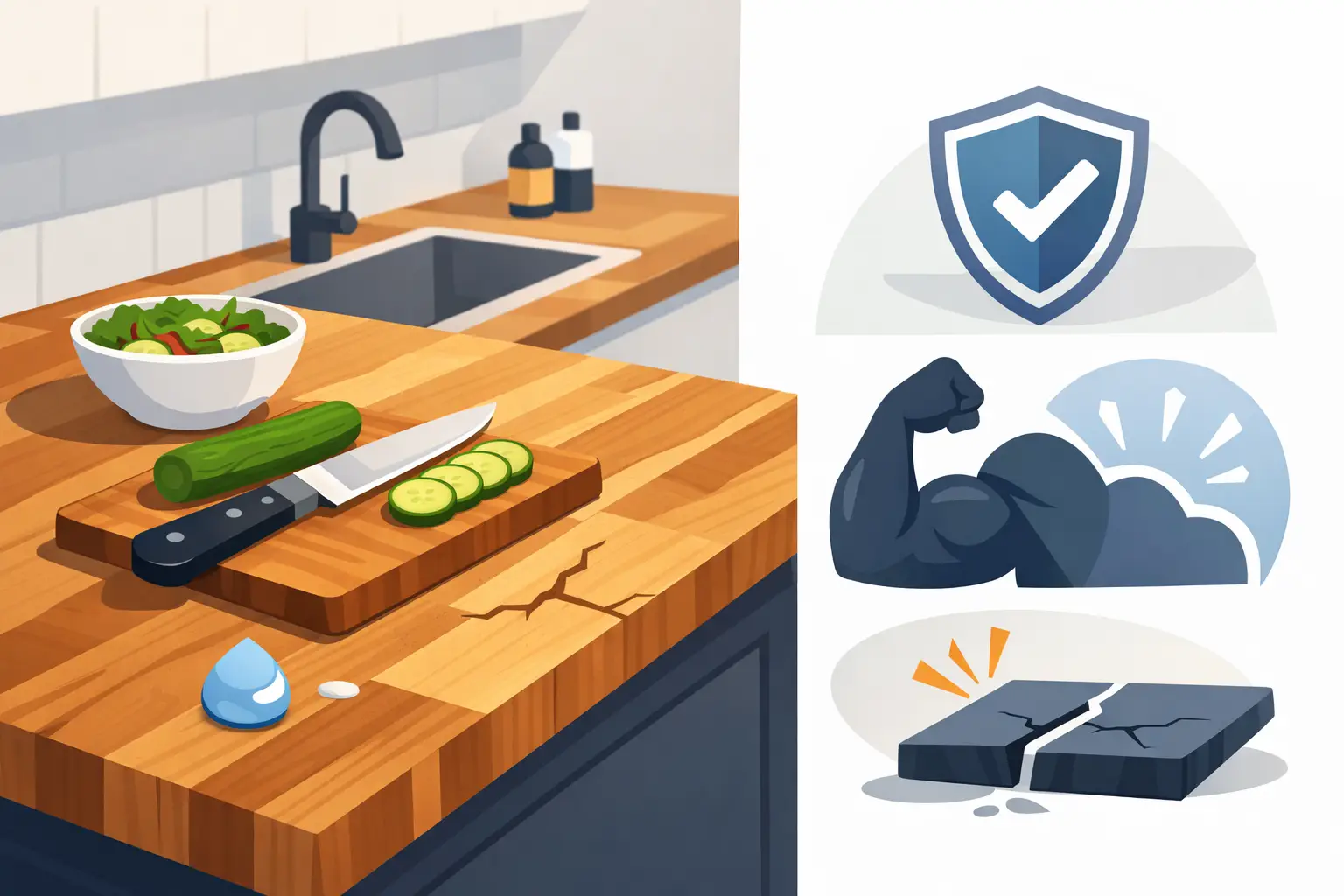
A dropped cast-iron skillet, a busy Saturday of meal prep, a child doing homework at the island – a kitchen countertop has real work to do. So, are butcher block countertops durable? Yes, when they are built from quality hardwood, properly installed, and cared for as a natural wood surface. They are not maintenance-free like some manufactured materials, but they offer a long service life, can be renewed instead of replaced, and develop character along the way.
For homeowners who want a countertop that feels substantial rather than disposable, that trade-off is often exactly the point. A well-made butcher block does not have to look untouched forever to be durable. It has to keep performing, stay structurally sound, and be repairable when life leaves a mark.
Are Butcher Block Countertops Durable in a Real Kitchen?
Durability starts with the wood itself. Hardwood species such as hard maple, white oak, walnut, cherry, and hickory stand up well to daily use because their fibers are dense enough to resist ordinary dents and wear. Each species has a different look and hardness, but a properly constructed top made from any suitable hardwood can serve a kitchen, island, laundry room, or work area for many years.
Construction matters just as much as species. A solid wood countertop made from carefully glued, properly acclimated boards is more stable than a thin wood veneer over a manufactured core. Grain direction, board selection, moisture content, and the quality of the glue-up all affect how the top handles seasonal changes in humidity.
That is why handmade fabrication makes a practical difference. A countertop should be built for its final dimensions, supported correctly, and given room to move naturally with the seasons. Wood expands and contracts across its width as humidity changes. That movement is normal, not a defect, but it needs to be accounted for during installation.
In daily use, butcher block handles plates, small appliances, grocery bags, serving dishes, and routine kitchen activity very well. It is also quieter and warmer under hand than stone or metal. It can dent if a heavy object hits it hard, and it can scratch if it is used aggressively. Unlike a chipped stone edge or damaged laminate surface, however, most marks in solid wood can be sanded out and refinished.
What Can Shorten a Butcher Block Countertop’s Life?
The biggest threat to a wood countertop is not normal use. It is prolonged moisture. Wood and standing water are not a good match, particularly around sinks, faucets, soap dispensers, dishwasher steam, and seams where water can work its way underneath the finish.
A spilled glass of water is not a problem if it is wiped up. Leaving a wet dish towel on the same spot every day can be. Water can darken the wood, raise the grain, weaken a finish, and eventually cause swelling or movement if it repeatedly reaches unprotected areas.
Heat deserves attention, too. A hot pan can damage a finish, leave a pale heat mark, or create a dark scorch mark. Always use trivets for cookware fresh from the stove or oven. The same goes for slow cookers, electric griddles, and coffee makers that give off steady heat and steam in one small area.
Sharp knives are another decision point. A food-safe oil finish makes a butcher block suitable for direct cutting, but cutting directly on a countertop will leave knife marks. Some homeowners love the working-kitchen look and choose to maintain it. Others prefer to protect the surface with a separate cutting board. Near a sink, using a dedicated cutting board is usually the easier choice for cleanliness and upkeep.
Finish Changes How the Countertop Performs
The finish is the working layer between your wood countertop and everyday kitchen messes. The right choice depends on how you plan to use the surface.
An oil-and-wax finish is a popular choice for true food-prep surfaces. It penetrates the wood and is easy to refresh at home. When the surface looks dry or water stops beading, clean it, let it dry fully, and apply a fresh coat of the recommended conditioner. This finish does not create a thick barrier, so it requires more regular attention around water.
A durable film finish, such as a quality polyurethane or conversion varnish system, creates a stronger barrier against moisture and stains. It is often a good fit for islands, breakfast bars, desk surfaces, laundry counters, and areas where direct knife use is not expected. The trade-off is that if the finish becomes deeply scratched or worn, repairing it may involve sanding and refinishing a larger section rather than simply applying more oil.
Neither finish is universally better. An oil-finished surface is easier to spot-repair and maintain for cutting use. A sealed surface typically asks less of homeowners day to day and provides better spill resistance. The best countertop is the one finished for the way your household actually uses it.
How Butcher Block Compares With Other Countertops
Butcher block is not the hardest countertop material available. Quartz, granite, and porcelain resist scratching and heat better in many situations. They also cannot be casually sanded and renewed when their appearance changes. Laminate is budget-friendly and low-maintenance, but deep damage usually means replacement rather than repair.
Wood sits in a different category. It is forgiving, renewable, and visually adaptable. A light sanding can erase years of small scratches, water rings, and dullness. If your kitchen gets remodeled later, a solid wood top can sometimes be cut down, refinished, or repurposed instead of sent to the landfill.
That repairability is a real part of durability. A countertop does not need to remain flawless to remain valuable. It needs to be capable of coming back from ordinary wear.
Simple Care That Protects Solid Wood
Butcher block care is straightforward, but consistency matters. Wipe spills promptly with a soft cloth. Use mild soap and water for routine cleaning, then dry the surface rather than letting water sit. Avoid harsh scouring pads, bleach-heavy cleaners, and products that leave a waxy residue unless they are specifically made for your finish.
Use trivets under hot cookware and keep wet items from living permanently beside the sink. Do not attach the countertop rigidly in a way that prevents seasonal movement. If the top is oil-finished, condition it whenever it looks dry, feels rough, or no longer repels a few drops of water.
For deeper scratches or stains, do not assume the countertop is ruined. Light surface damage may be corrected with careful sanding and a finish refresh. Dark water marks, deep gouges, or movement near a sink may call for more involved repair, but solid wood gives you options that many countertop materials do not.
Is Butcher Block Right for Your Home?
Butcher block is an excellent choice for homeowners who appreciate natural materials and are willing to give them basic care. It works especially well on kitchen islands, breakfast bars, baking stations, coffee areas, laundry rooms, and workspaces where warmth and custom sizing matter. It can also be a beautiful main kitchen counter when the sink area is planned carefully and the finish matches the intended use.
It may not be the best fit for someone who wants to leave standing water, set down hot pans without protection, or never think about maintenance again. That is not a knock on wood. It is simply the honest difference between a living material and a manufactured surface.
At Tooill Cabinets, custom butcher block is built around the dimensions and use of the space, because a countertop that fits correctly is easier to support, finish, and enjoy for the long haul. Choose a hardwood and finish that match your habits, protect it from repeated moisture and heat, and your countertop can become one of the most hardworking and personal surfaces in your home.