
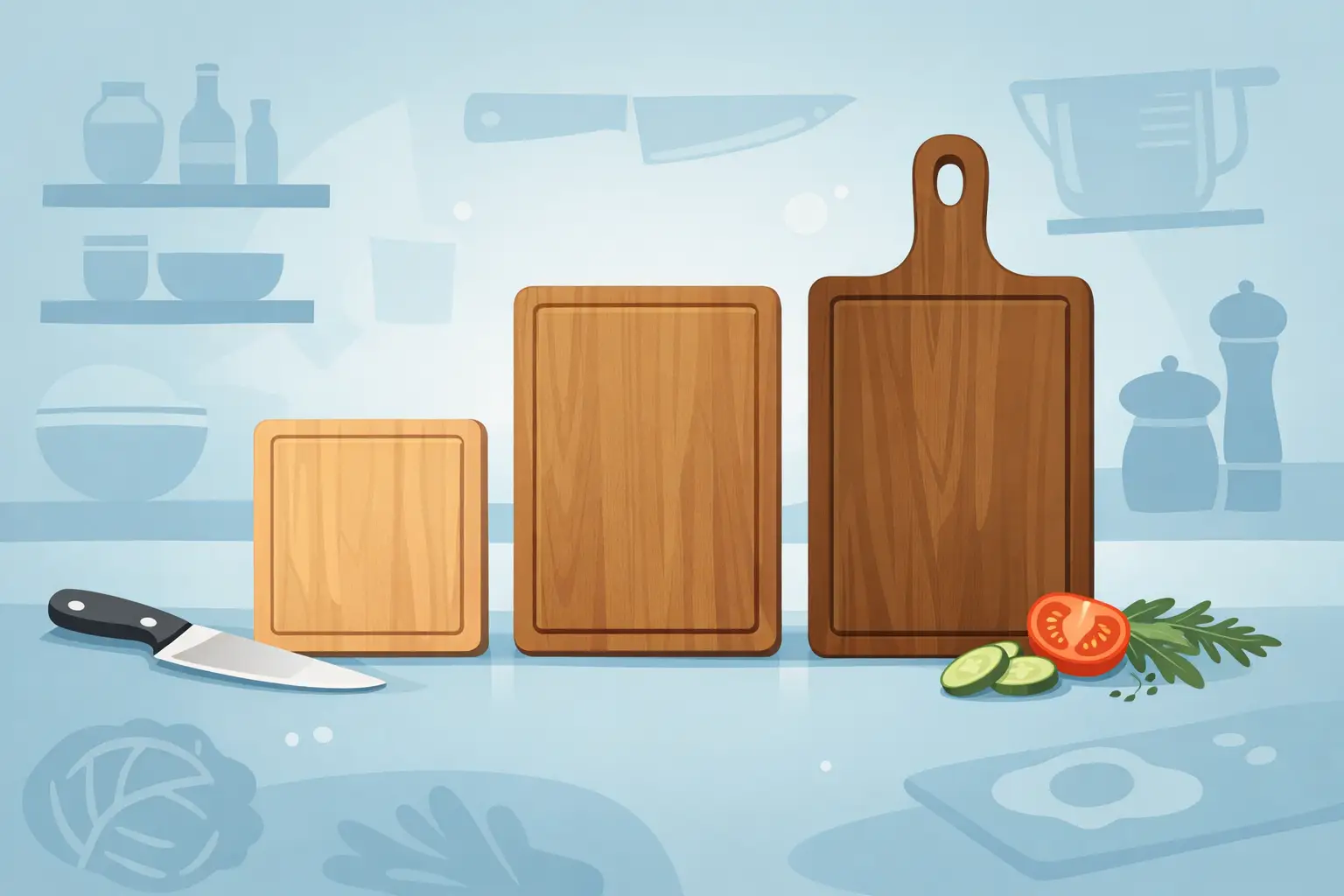
A cutting board that is too small gets annoying fast. You run out of room halfway through chopping an onion, herbs spill onto the counter, and slicing a roast turns into a balancing act. A board that is too big can be just as frustrating if it hogs your workspace or feels heavy enough to avoid using. If you are wondering how to choose cutting board size, the right answer starts with how you actually cook, not just what looks good online.
How to choose cutting board size for real kitchens
Most people do best with a board that matches their prep habits, sink size, and available counter space. That sounds simple, but it is where most buying mistakes happen. A board can be beautifully made and still be the wrong fit if it does not suit the way your kitchen works.
Think first about your everyday meals. If most of your cooking means slicing fruit, making sandwiches, or chopping one or two vegetables, you probably do not need an oversized butcher block board. If you cook dinner from scratch several nights a week, prep ingredients in batches, or carve larger cuts of meat, extra surface area matters a lot more than people expect.
The best board size is the one you will reach for every day. That usually means large enough to be useful, but not so large that storing, lifting, or cleaning it becomes a chore.
Start with your available counter space
Before looking at standard sizes, measure the spot where the board will actually live during use. Not the biggest open area in the kitchen. The real working space.
Leave enough room around the board so your hands are not cramped against a backsplash, coffee maker, or stove edge. You want a board that gives you a comfortable chopping zone without turning your counter into a traffic jam. In smaller kitchens, a medium board often gets more use simply because it fits naturally.
If your kitchen has generous prep space, a larger board can make cooking easier and cleaner. You can keep cut ingredients on one side and uncut ingredients on the other, which reduces mess and constant transferring to bowls.
Match the board to what you prep most often
This is where size becomes practical instead of theoretical.
A small board, roughly 8 by 12 inches to 10 by 14 inches, works well for quick tasks like slicing lemons, trimming strawberries, or cutting a bagel. It is easy to grab and easy to wash, but it runs out of room fast. For many households, this is a secondary board, not the main one.
A medium board, around 12 by 18 inches, is the sweet spot for a lot of home cooks. It handles weeknight prep comfortably without feeling oversized. If you chop vegetables, portion chicken, or prep lunch daily, this size tends to feel balanced.
A large board, often 15 by 20 inches or bigger, is ideal for serious prep, family cooking, and carving. If you regularly cut multiple vegetables at once, break down larger proteins, or want a board that can double as a serving piece, large starts to make sense. It also looks substantial on the counter, which matters if the board will stay out as part of your kitchen style.
Standard sizes versus custom sizing
Standard sizes are useful because they give you a starting point. But kitchens are not standard, and neither are cooking habits.
That is where custom sizing becomes valuable. Maybe you need a board that fits between the sink and range, sits neatly on top of a section of countertop, or works on a narrow apartment kitchen cart. Maybe you want extra depth for prep but a shorter length for storage. Those details can make the difference between a board that technically works and one that feels made for your kitchen.
For homeowners investing in solid wood, exact sizing also matters because a quality board is something you expect to use for years. Settling for almost right usually shows up later in the form of inconvenience.
Thickness changes the feel too
When people ask how to choose cutting board size, they often focus only on length and width. Thickness matters more than many buyers realize.
A thinner board is lighter and easier to move from counter to sink. That is great for everyday convenience. A thicker board feels more substantial, stays put well, and has that solid handcrafted presence many people want in a premium wood board. It also tends to suit larger dimensions better, since a big board should feel stable rather than flimsy.
The trade-off is weight. A large, thick hardwood board can be heavy. If you want one board to live on the counter full-time, that may be perfect. If you expect to lift it, wash it, dry it, and put it away after every use, think honestly about what you will enjoy handling.
Do not forget your sink and storage
A cutting board may fit your counter beautifully and still be inconvenient if it barely fits in the sink or cabinet. Measure both before buying.
If you hand-wash your boards, make sure the size is manageable at the sink. Large wood boards do not need to be submerged, but you do need enough room to rinse and wipe them down without fighting the faucet. Storage is just as important. If the board slides neatly into a cabinet, pantry slot, or vertical rack, you are more likely to keep using it.
This is one reason many customers end up owning more than one board. A medium board handles daily use, while a larger statement board comes out for heavier prep, hosting, or carving.
How to choose cutting board size by use case
The easiest way to narrow your choice is to decide what job the board needs to do most often.
For everyday prep, a medium board is usually the safest choice. It gives enough room for chopping without dominating the counter. For meal preppers and frequent cooks, large is often worth it because it reduces clutter and creates a more efficient workspace. For serving cheese, bread, or charcuterie, shape and appearance may matter as much as cutting area, so a board can be slightly larger or more decorative without affecting performance.
If you want a board specifically for meat carving, look for enough length to support brisket, roast chicken, pork loin, or steak service without juices running off the edge. If you bake often, a larger board can also work as a dough and pastry surface, especially if you prefer the feel of wood.
One big board or two smaller ones?
There is no rule that says you need one board to do everything. In fact, many kitchens work better with two.
A medium board for daily prep and a larger board for bigger jobs is often the most practical setup. It gives you flexibility without forcing every task onto the same surface. The smaller board is easier to clean and store, while the larger one earns its keep when you need room.
If budget or space limits you to one, choose the largest size you can comfortably use every day. That is usually the smartest compromise.
Material and craftsmanship affect size decisions
Wood boards have a different feel than plastic or bamboo, and that affects what size will work best for you. A well-made hardwood board has weight, stability, and a surface that feels dependable under a knife. Because of that, many people can comfortably use a slightly larger wood board than they would in a thinner, lighter material.
Craftsmanship matters here. A handmade board with clean edges, solid thickness, and careful finishing tends to feel easier to live with because it sits properly, looks better on the counter, and holds up over time. At Tooill Cabinets, custom sizing makes sense for buyers who want a board to fit both their kitchen and their habits instead of forcing a stock size into the job.
A simple way to choose the right size
If you are still unsure, use this test. Picture your most common prep session. Set out a towel on the counter in the size you are considering. Stand in front of it. Mimic chopping, moving ingredients aside, and carrying the board to the sink.
If the space feels cramped, go up a size. If it feels awkwardly large, go down. That quick test tells you more than product photos ever will.
The right cutting board size should make your kitchen feel easier to work in. Not crowded, not fussy, not precious. Just solid, useful, and made for the way you cook.