
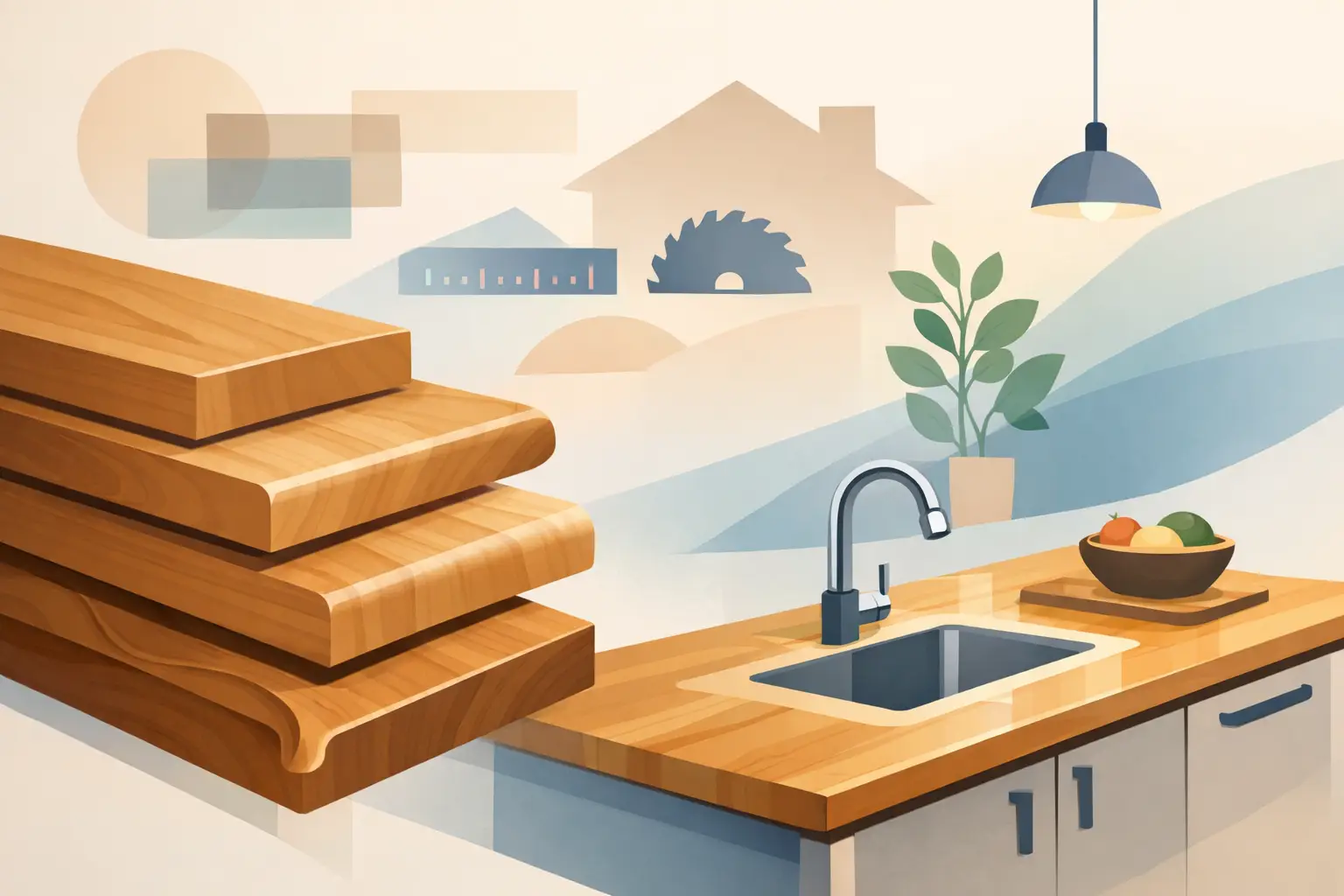
A wood countertop can be cut to the exact length, depth, and thickness your space needs, but the edge profile is what your hands notice every day. This wood countertop edge profile guide will help you choose an edge that feels right at the sink, looks intentional from across the room, and suits how your home actually functions.
The best profile is not always the most decorative one. A busy family kitchen may benefit from a forgiving softened edge, while a furniture-style island may call for a more detailed shape. Wood species, countertop thickness, cabinet style, and the amount of overhang all matter. The goal is a handcrafted look that holds up beautifully without making everyday use harder than it needs to be.
What Is a Wood Countertop Edge Profile?
An edge profile is the shape cut or routed along the exposed perimeter of a countertop. It changes the way the wood catches light, how substantial the top appears, and how comfortable it feels when you lean against it.
A countertop can have the same profile on every exposed side, or it can use different treatments depending on the installation. For example, the wall side of a kitchen counter usually has no need for a finished decorative edge, while the front and side overhangs do. A freestanding island, table, or desk may need finished edges all the way around.
With solid wood, edge work is more than decoration. A properly shaped edge removes sharp corners that can chip, splinter, or feel uncomfortable. It also gives finish a smoother surface to wrap around, helping protect a hardworking area from routine moisture and wear.
The Most Popular Wood Countertop Edge Profiles
Eased Edge: Clean, Simple, and Easy to Live With
An eased edge looks nearly square from a distance, but its sharp corners are lightly rounded or softened. It is one of the most popular choices for butcher block countertops because it keeps a crisp, modern profile without leaving a hard, vulnerable corner.
This option works especially well in contemporary kitchens, utility rooms, laundry spaces, and workbenches. It lets the grain and thickness of the wood do the talking. An eased edge is also a smart choice when you want a countertop that feels custom-made but not overly formal.
For most homes, a lightly eased edge offers an excellent balance of appearance, comfort, and durability. It is subtle enough to pair with nearly any cabinet style, from painted shaker doors to clean-lined modern cabinetry.
Roundover: A Comfortable Everyday Favorite
A roundover creates a visible curve along the top edge, the bottom edge, or both. It is softer to the touch than an eased edge and gives wood countertops a warm, approachable look.
A small roundover is common for kitchen counters and cutting-board-style surfaces. A larger radius creates a more relaxed, substantial appearance and can be especially comfortable on a breakfast bar or island where people sit, lean, and gather. If you have young children, the absence of a sharp edge can be an added advantage.
The trade-off is style. A generous roundover may look too casual in a very tailored or minimalist kitchen. It can also make a thin top appear thinner than it is. On a thicker butcher block, however, it often looks balanced and intentional.
Bullnose: Fully Rounded and Family-Friendly
A bullnose edge is rounded from top to bottom, creating a smooth half-circle shape on the face of the countertop. It has a softer, more traditional look than a standard roundover and feels especially comfortable where there is seating.
Bullnose profiles are a natural fit for islands, bar tops, dining tables, and countertops with a deeper overhang. They soften the visual weight of a thick slab and eliminate the crisp corners that can catch hips, chairs, or bags passing through a tight kitchen.
Because a bullnose removes more material from the edge, it can make the countertop look less sharp and architectural. That is not a flaw – it simply depends on the room. In a farmhouse, traditional, or transitional space, a bullnose can feel right at home. In a sleek modern kitchen, an eased edge may better match the cabinetry.
Chamfered Edge: Crisp Detail Without the Formality
A chamfer is a flat angled cut along the edge, rather than a curve. It adds a defined line that catches light differently from the face and top of the wood. The result is clean, intentional, and slightly more detailed than an eased edge.
This profile works well when you want a contemporary look with more visual interest. It can make a thick wood top look lighter by breaking up the vertical face. A chamfer also pairs nicely with black hardware, steel accents, and modern-rustic interiors.
Keep in mind that a chamfer still has defined transitions. It is not as soft against the forearm as a roundover or bullnose, particularly on a seating overhang. For a prep counter or floating shelf, that may not matter. For an island where people eat breakfast every morning, comfort deserves more weight in the decision.
Ogee Edge: Decorative and Furniture-Inspired
An ogee profile uses an S-shaped curve, usually combining a concave section with a rounded lower edge. It is a more traditional, decorative choice that brings a furniture-grade feel to a countertop.
Ogee edges work best when the rest of the room supports them. Think detailed cabinet doors, classic trim, historic homes, formal dining areas, and statement islands. On a plain slab-front cabinet run, an ogee can feel disconnected unless other traditional details tie the room together.
This profile also needs enough thickness to look proportional. A thin countertop with a deep ogee can appear overworked, while a thick custom island top can carry it well. Since the shape has more curves and grooves, it takes more care to finish and refinish than a simple eased edge.
Choosing the Right Edge for How You Use the Countertop
Start with the room’s purpose. A perimeter kitchen counter sees cutting boards, dishes, spilled water, and plenty of elbows. A lightly eased edge or small roundover is usually practical there. Both are comfortable, durable, and easy to maintain when the countertop needs a refresh.
For an island with seating, consider the overhang before selecting the profile. A rounded edge feels better against forearms and is friendlier in high-traffic walkways. If the island is mainly a visual centerpiece with little seating, a chamfer or a more detailed profile may make a stronger design statement.
Thickness should guide the choice, too. A 1 1/2-inch thick butcher block can handle almost any common profile while still looking substantial. Thicker tops give more room for a bold bullnose, chamfer, or ogee. On thinner wood surfaces, simple edge softening generally looks cleaner and preserves the strength of the top.
The wood itself makes a difference. Maple has a fine, even grain that suits clean contemporary edges. Walnut brings enough natural character to stand out with a simple eased or roundover profile. Oak’s open grain can look especially handsome on thicker, more traditional treatments. There is no hard rule here, but letting the wood remain the focal point usually produces the most timeless result.
A Few Practical Details That Matter
A sharp square edge may look appealing in a photo, but it is rarely the best choice for a real wood countertop. Wood moves slightly with seasonal humidity changes, and a sharp corner is more susceptible to dings and finish wear. Even a very small ease provides protection without changing the overall look.
Edge profiles should also be considered alongside sink and backsplash details. A farmhouse sink, for example, often pairs naturally with a softened edge, while an undermount sink can work with almost any profile as long as the exposed cutout is carefully sealed. Near a sink, proper finish maintenance matters more than the specific profile, but a smooth edge is easier to wipe dry.
If you plan to use the top as a food-prep surface, ask about the finish and intended use. Many countertops are built for installation and protected with a durable finish, while cutting boards are finished for direct food contact and regular oiling. The right edge can improve comfort, but the finish system should match the job.
For custom work, share a photo of your cabinets, the countertop thickness you want, and where each edge will be exposed. At Tooill Cabinets, those details help turn a general preference like “soft but not too rounded” into a profile that fits the piece and the room.
Wood Countertop Edge Profile Guide: Keep It Balanced
The strongest designs usually come from proportion, not excess. A thick walnut island top with a small roundover can feel refined and welcoming. A maple counter with a clean eased edge can look sharp for decades. A decorative profile can be the right choice when it repeats the character already present in the home.
Before ordering, run your hand along sample edges if possible and picture the countertop in daily use. The right profile should feel like it belongs there – comfortable at the places people gather, durable at the places people work, and thoughtfully finished from every visible angle.