
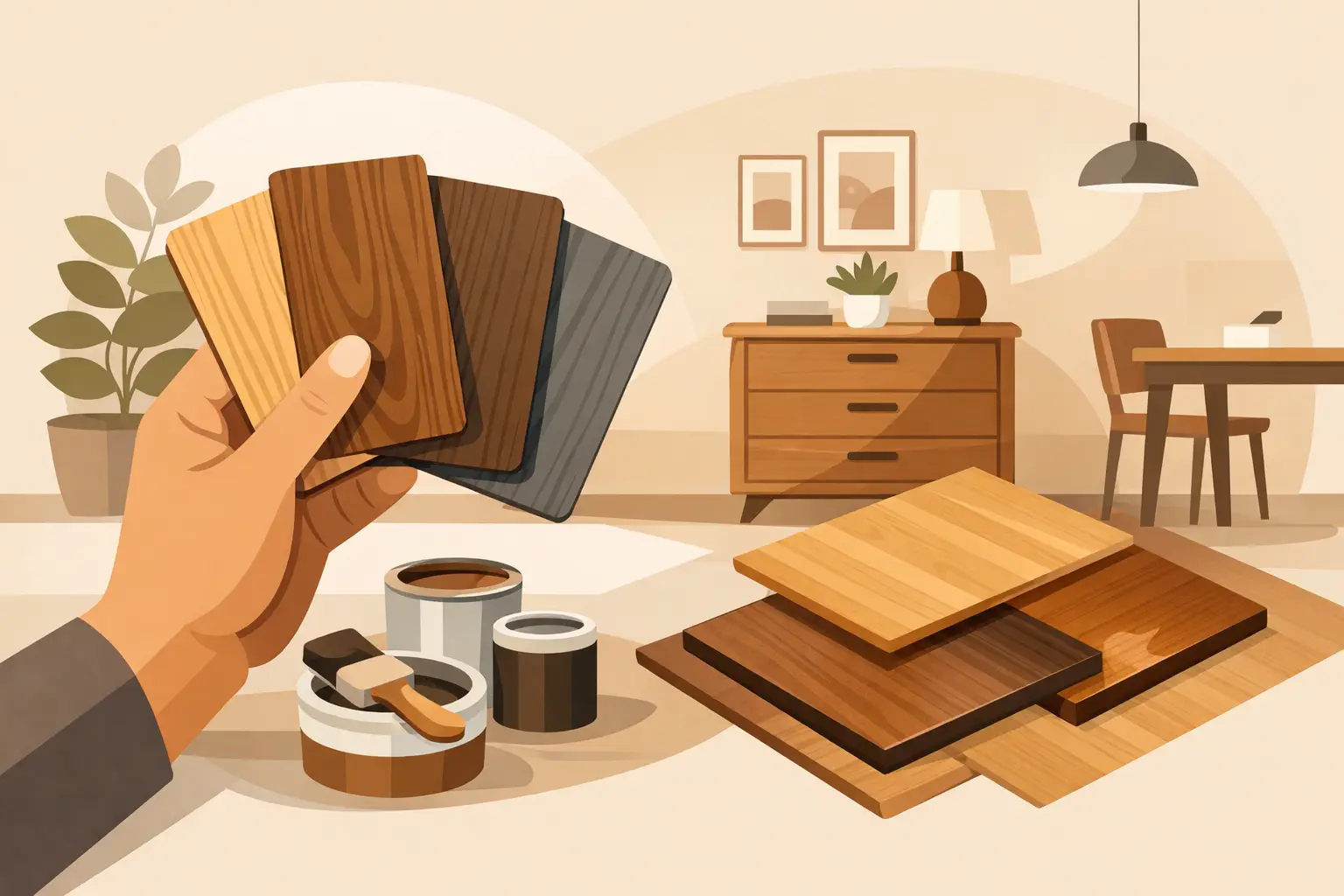
A beautiful wood surface can be built to the exact right size, sanded smooth, and made from excellent lumber, yet still disappoint if the finish does not suit the job. Wood finishes determine how a countertop handles splashes, whether a dining table develops a warm patina or a dull scratch pattern, and how much care a cutting board needs between meals.
The right choice is not simply the toughest product on the shelf. It is the finish that fits the wood species, the intended use, the look you want, and the maintenance you are willing to give it. A kitchen island used for homework, grocery bags, and weeknight dinners needs something different from a decorative floating shelf. Start with real life, then choose the finish.
What a Wood Finish Needs to Do
Wood moves with seasonal humidity, absorbs moisture, and can pick up stains from everyday use. A finish slows those forces down while changing the surface’s color, sheen, and feel. It cannot make solid wood indestructible, but it can make a well-built piece far more practical for a busy home.
For most custom wood surfaces, the decision comes down to four questions. How much water will the surface see? Will it come in direct contact with food? Do you prefer a natural, touchable wood feel or a more sealed furniture surface? And are you comfortable refreshing the finish over time?
A finish with strong water resistance may create a harder barrier, but scratches in that barrier can be more noticeable and more involved to repair. A penetrating oil finish is often easier to spot-repair and keeps wood feeling natural, but it usually needs periodic reapplication. Neither approach is automatically better. The right answer depends on where the piece will live.
Wood Finishes: Penetrating Oils vs. Surface Films
Most finishes used around the home fall into two practical categories: penetrating finishes and film-forming finishes. Some modern products sit between the two, but this distinction makes the buying decision much clearer.
Penetrating oil finishes
Penetrating finishes soak into the fibers near the surface rather than building a thick coating on top. Common options include food-grade mineral oil for cutting boards and certain oil or hardwax oil systems for furniture, counters, and shelves.
The main appeal is feel. The grain remains present under your hand instead of feeling covered in plastic. Oil also brings out depth in many species, especially walnut, cherry, and maple, giving the wood a richer appearance. Small scratches can often be sanded lightly and blended back into the finish without refinishing the entire piece.
The trade-off is maintenance. Mineral oil on a cutting board should be refreshed when the wood looks dry or absorbs water quickly. Oil-finished countertops and tables may need a maintenance coat based on the product used and how hard the surface works. A home with young children, frequent entertaining, or a sink cutout deserves a finish selected specifically for that level of exposure.
Film-forming finishes
Film-forming finishes leave a protective layer on the wood. Polyurethane, conversion varnish, lacquer, and some water-based finishes are familiar examples. They are often chosen for tabletops, shelves, desks, and other surfaces where resistance to spills, fingerprints, and routine cleaning matters.
A good film finish can offer excellent protection and requires less frequent upkeep than a simple oil finish. Water-based products generally keep pale woods closer to their original color, while oil-based finishes often add a warmer amber tone over time. That warming can be beautiful on oak or walnut, but it may not be the look you want on maple or birch.
The compromise is repairability. A deep gouge in a sealed surface may require more than a quick touch-up to disappear cleanly. Matching sheen and blending a repair into surrounding areas takes care. For a dining table or floating shelf, the extra protection is often worth it. For a cutting surface, it is usually not the right direction.
Match the Finish to the Surface
A wood product should be finished for its actual role, not its product category alone. Two butcher block tops may require different treatment if one is a decorative laundry-room counter and the other will be used beside a kitchen sink every day.
Butcher block countertops and island tops
Countertops face water, food, glasses, cleaners, and heavy use. If the top will serve as a true food-prep surface, a food-contact-appropriate oil or oil-and-wax system is often the practical choice. It can be maintained and repaired without stripping a large section of the top.
If it is primarily a work surface, coffee bar, desk, or decorative island top, a durable furniture-grade finish may make more sense. It offers greater resistance to spills and reduces routine maintenance. Still, even a well-finished wood countertop should not be treated like stone. Wipe up standing water, use trivets for hot cookware, and avoid harsh cleaners.
Dining tables and desks
Tables take a different kind of abuse: sliding plates, school projects, writing, serving dishes, and occasional spilled drinks. A durable film finish is usually the easiest fit for families who want a low-maintenance surface. Satin sheen is a popular middle ground because it softens glare and tends to hide minor wear better than a high-gloss finish.
For homeowners who value a more natural hand-rubbed feel and do not mind maintenance, a quality hardwax oil finish can be a strong option. It gives a softer, lower-build appearance and allows for localized repairs. The deciding factor is usually lifestyle, not appearance alone.
Floating shelves and decorative surfaces
Shelves generally see less moisture and abrasion, so the finish can be chosen more for color and sheen. A clear protective finish helps limit dust buildup and makes routine cleaning easy. If the shelf will hold plants, use saucers and wipe up water promptly. No clear coat can protect wood from a planter that leaks unnoticed for weeks.
Cutting boards
Cutting boards are their own category. They need a finish that is appropriate for direct food contact and simple to renew. Food-grade mineral oil, often followed by a board conditioner containing wax, is a time-tested choice. It does not create a hard sealed shell, but that is part of the point: the board can be cleaned, dried, re-oiled, and returned to service.
Avoid putting a cutting board in the dishwasher, leaving it submerged, or using it as a trivet for hot pans. Regular care matters more than chasing a permanent finish, because a board is meant to be used and renewed.
Color, Sheen, and the Wood Itself
Finishes do more than protect. They change how wood reads in a room. Walnut often becomes deeper and warmer with oil. Maple can shift from pale cream toward honey tones with ambering finishes. White oak may take on a more golden cast or stay relatively neutral depending on the finish system.
Always consider the surrounding room. A finish that looks perfect under workshop lighting can look different beside white cabinets, warm flooring, or cool daylight. Samples are valuable when you are matching existing furniture or trying to keep a countertop from looking too yellow, too dark, or too glossy.
Sheen matters just as much. Matte and satin finishes create a quieter, more natural look. Semi-gloss reflects more light and can make grain pop, but it also highlights fingerprints, dust, and surface imperfections. For many handmade tables, shelves, and counters, satin gives the best balance of warmth and everyday practicality.
Food-Safe Does Not Mean Maintenance-Free
The phrase “food-safe” can cause confusion. A finish may be suitable once fully cured, but that does not mean every finished surface should be used as a cutting board. A kitchen counter can be appropriate for incidental food contact while still being better protected with a cutting board for chopping and heavy knife work.
Cure time also matters. Dry to the touch is not the same as fully cured. A finish needs the manufacturer’s recommended time before it is exposed to water, heavy objects, food preparation, or routine cleaning. Rushing this stage can leave marks in an otherwise excellent finish.
For everyday cleaning, use a lightly damp cloth and mild soap when needed. Skip abrasive scrubbers, strong degreasers, and cleaners that leave a heavy residue. Wood does best with simple, consistent care.
Plan for the Life of the Piece
The best finish is one you can live with years from now. Before ordering a custom countertop, table, shelf, or cutting board, think beyond the first-day appearance. Ask whether the surface will see water, heat, direct food prep, children, pets, or frequent entertaining. Decide whether you want a finish that stays low-maintenance or one that can be renewed by hand as it gains character.
At Tooill Cabinets, that conversation is part of building a wood surface around your space instead of asking your space to settle for a standard product. Choose a finish that supports how you actually use your home, and the wood will have every chance to grow more personal and more beautiful with time.